What Is Hydraulic Oil? Types, Grades & Selection | Hidroman
What Is Hydraulic Oil? Types, Properties, ISO VG Grades, and How to Choose the Right Hydraulic Fluid
Hydraulic oil is one of the most important operating fluids in industrial and mobile hydraulic systems. It transfers power, lubricates moving components, helps control operating temperatures, and protects hydraulic equipment against wear and corrosion.
Hydraulic oil is widely used in construction equipment, mining machinery, agricultural equipment, industrial manufacturing facilities, hydraulic power units, and heavy-duty machinery.
Selecting the correct hydraulic fluid is essential for maintaining system efficiency, minimizing component wear, and extending equipment service life.
Using the wrong viscosity grade, operating at excessive temperatures, allowing contamination, or neglecting filtration can lead to pump wear, valve malfunctions, cylinder performance problems, and unexpected equipment downtime.
Hidroman provides hydraulic engineering and filtration solutions designed to support reliable hydraulic system operation and maintenance.
What Is Hydraulic Oil?
Hydraulic oil is a working fluid used to transmit power within hydraulic systems.
A hydraulic pump draws fluid from a reservoir and delivers it under pressure through hydraulic lines to control valves, cylinders, and hydraulic motors.
The pressurized fluid generates mechanical force in hydraulic cylinders and rotational motion in hydraulic motors.
Hydraulic oil performs several essential functions:
Power transmission: Transfers hydraulic energy from the pump to system components.
Lubrication: Reduces friction between moving mechanical surfaces.
Heat transfer: Helps carry heat away from components and operating areas.
Corrosion protection: Helps protect metal surfaces against rust and corrosion.
Contaminant transport: Carries suspended particles toward filtration components.
Sealing support: Helps maintain lubricating films and operating clearances in certain hydraulic components.
Hydraulic oil has very low compressibility under normal operating conditions, although it is not completely incompressible. This characteristic allows hydraulic systems to transmit force and control movement effectively.
Types of Hydraulic Oil
Hydraulic fluids are available in different formulations depending on their base fluid chemistry, additive packages, operating temperature range, and application requirements.
1. Mineral-Based Hydraulic Oil
Mineral-based hydraulic oils are manufactured using base oils derived from petroleum refining.
They are among the most widely used hydraulic fluids in industrial and mobile hydraulic equipment.
Depending on their formulation, mineral-based hydraulic oils can provide anti-wear protection, oxidation resistance, corrosion protection, and suitable viscosity characteristics.
Common applications include:
Construction equipment
Hydraulic presses
Industrial hydraulic power units
Mining machinery
Agricultural equipment
Cranes and lifting systems
2. Synthetic Hydraulic Oil
Synthetic hydraulic oils are formulated using specially manufactured synthetic base fluids.
Depending on the formulation, they can provide improved high-temperature stability, oxidation resistance, low-temperature flow characteristics, and extended service life.
They are often considered for demanding applications where conventional mineral oils may not provide the required operating performance.
3. Biodegradable Hydraulic Oil
Biodegradable hydraulic fluids are developed for applications where environmental protection and reduced environmental impact are important.
Typical applications include:
Marine equipment
Forestry machinery
Agricultural equipment
Environmentally sensitive industrial applications
Equipment operating near waterways
Different biodegradable hydraulic fluids use different base fluid chemistries. Classification and suitability should be evaluated according to applicable specifications, including ISO 15380 where relevant.
4. Fire-Resistant Hydraulic Fluids
Fire-resistant hydraulic fluids are designed for industrial applications where the risk of fire is a significant concern.
They are used in applications such as steel production, foundries, hot rolling mills, and other industrial facilities operating near high-temperature processes.
Fire-resistant fluids are available in different chemical formulations. They are not automatically interchangeable with conventional mineral hydraulic oils.
Seal compatibility, material compatibility, fluid handling requirements, and equipment manufacturer approvals must be checked before use.
Main Properties of Hydraulic Oil
The quality of hydraulic oil cannot be determined by viscosity alone. Several physical and chemical properties influence its performance.
Viscosity
Viscosity is the resistance of a fluid to flow.
Hydraulic oil with excessively low viscosity may provide insufficient lubrication and increase internal leakage.
Oil with excessively high viscosity can increase pressure losses, make pump suction more difficult, and create cold-starting problems.
The correct viscosity must be selected according to the hydraulic equipment manufacturer's recommendations and the actual operating conditions.
Viscosity Index (VI)
The viscosity index indicates how much an oil's viscosity changes as temperature changes.
Hydraulic oils with higher viscosity index values generally experience smaller viscosity changes over a given temperature range.
High-VI hydraulic oils can be beneficial in mobile equipment and industrial systems exposed to significant temperature variations.
Oxidation Stability
Oxidation stability describes an oil's resistance to chemical degradation caused by oxygen, elevated temperatures, and catalytic metals.
Oil oxidation can lead to:
Increased acidity
Viscosity changes
Sludge formation
Varnish deposits
Additive depletion
Reduced operating performance
Anti-Wear Protection
Anti-wear additives help protect pumps and other hydraulic components by supporting the formation of protective lubricating films between moving surfaces.
This property is particularly important in systems operating under demanding pressure and load conditions.
Foam Control and Air Release
Hydraulic oil should have suitable foam-control and air-release characteristics.
Excessive air entrainment can contribute to noisy operation, inconsistent actuator movement, accelerated oxidation, and increased cavitation risk.
Water Separation
The ability of certain hydraulic oils to separate from water is important for contamination control.
Water contamination can contribute to corrosion, reduced lubrication performance, filter problems, and component damage.
Water separation characteristics vary according to the fluid formulation and application.
Hydraulic Oil ISO VG Grades Explained
ISO VG is one of the most commonly used viscosity classification systems for industrial hydraulic oils.
The ISO VG grade is based on the fluid's kinematic viscosity at 40°C (104°F), expressed in mm²/s, also known as centistokes (cSt).
A higher ISO VG number indicates a higher nominal viscosity.
Common Hydraulic Oil ISO VG Grades
| ISO VG grade | Nominal viscosity at 40°C |
|---|---|
| ISO VG 15 | 15 cSt |
| ISO VG 22 | 22 cSt |
| ISO VG 32 | 32 cSt |
| ISO VG 46 | 46 cSt |
| ISO VG 68 | 68 cSt |
| ISO VG 100 | 100 cSt |
Each ISO VG grade has a defined viscosity tolerance range. The values shown above represent the nominal viscosity grades.
ISO VG 32 Hydraulic Oil
ISO VG 32 hydraulic oil is used in applications requiring relatively low viscosity, depending on operating temperature, pump design, and equipment specifications.
It can be suitable for certain industrial and mobile hydraulic systems.
ISO VG 46 Hydraulic Oil
ISO VG 46 is one of the most widely used hydraulic oil viscosity grades in industrial applications.
It is commonly specified for hydraulic power units, industrial presses, and various manufacturing machines, provided it meets the equipment manufacturer's requirements.
ISO VG 68 Hydraulic Oil
ISO VG 68 hydraulic oil has a higher nominal viscosity than ISO VG 46.
It may be considered for applications requiring a higher viscosity under the specified operating conditions.
Important: A higher ISO VG grade is not automatically better for high-pressure hydraulic systems. The correct viscosity depends on pump design, operating temperature, speed, pressure, and manufacturer recommendations.
Hydraulic Oil Classifications: HL, HM, HV, and HLP
ISO VG describes the viscosity grade of hydraulic oil, while classifications such as HL, HM, and HV describe additional performance characteristics.
Common classifications include:
HL: Mineral hydraulic oils with oxidation and corrosion protection properties.
HM: Hydraulic oils with improved anti-wear properties compared with HL fluids.
HV: Hydraulic oils formulated with a high viscosity index to provide improved viscosity stability across temperature changes.
DIN 51524 also includes widely recognized classifications:
HLP: Mineral hydraulic oil with anti-wear properties.
HVLP: High-viscosity-index hydraulic oil with anti-wear properties.
When selecting hydraulic oil, check both the required performance classification and the equipment manufacturer's specific fluid recommendations.
Hydraulic Oil Additives and Their Functions
Hydraulic oil manufacturers use additive packages to improve the performance of base oils under different operating conditions.
Common additive categories include:
Anti-wear additives: Help reduce wear in pumps and other moving hydraulic components.
Antioxidants: Help slow the oxidation process and protect the oil against chemical degradation.
Rust and corrosion inhibitors: Help protect metal surfaces against moisture and corrosive conditions.
Anti-foam additives: Help control excessive foam formation during operation.
Viscosity index improvers: Help reduce viscosity changes caused by temperature variations.
Pour point depressants: Improve low-temperature flow characteristics in suitable formulations.
The performance of an additive package depends on the base oil and overall formulation. Different hydraulic oils should not be mixed without confirming their compatibility.
Hydraulic Oil Temperature and Viscosity Relationship
Hydraulic oil viscosity changes with operating temperature.
As temperature increases, hydraulic oil becomes thinner and its viscosity decreases.
As temperature decreases, hydraulic oil becomes thicker and its resistance to flow increases.
These changes directly affect hydraulic system performance.
Effects of Excessive Hydraulic Oil Temperature
Reduced oil film thickness
Increased internal leakage
Higher wear risk in pumps and valves
Accelerated oxidation
Shorter oil service life
Increased risk of varnish and sludge formation
Effects of Low Hydraulic Oil Temperature
Increased pump suction resistance
Higher pressure losses
Poor lubrication during cold startup
Increased cavitation risk
Slower system response
Hydraulic oil must therefore be selected according to the actual operating temperature range of the equipment.
Why Is Hydraulic Oil Analysis Important?
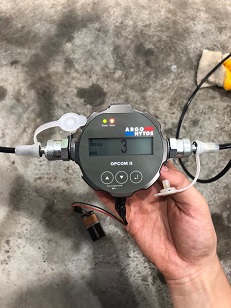
Hydraulic oil analysis is a condition-monitoring method used to evaluate the physical and chemical condition of hydraulic fluid.
Rather than relying only on operating hours, oil analysis helps maintenance teams make informed decisions based on the actual condition of the fluid.
Depending on the application and monitoring program, hydraulic oil analysis may include:
Kinematic viscosity
Water contamination
Particle contamination
Oxidation level
Acid number
Wear metals
Additive condition
Varnish formation tendency
The results can help determine whether the oil can remain in service, requires additional filtration, or should be replaced.
Proper sampling procedures are essential. Samples should be collected from suitable sampling points using clean containers and consistent sampling methods.
Hydraulic Oil Contamination and Filtration
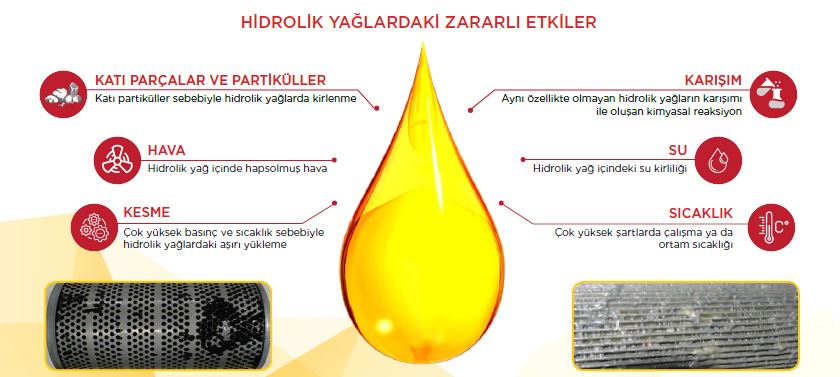
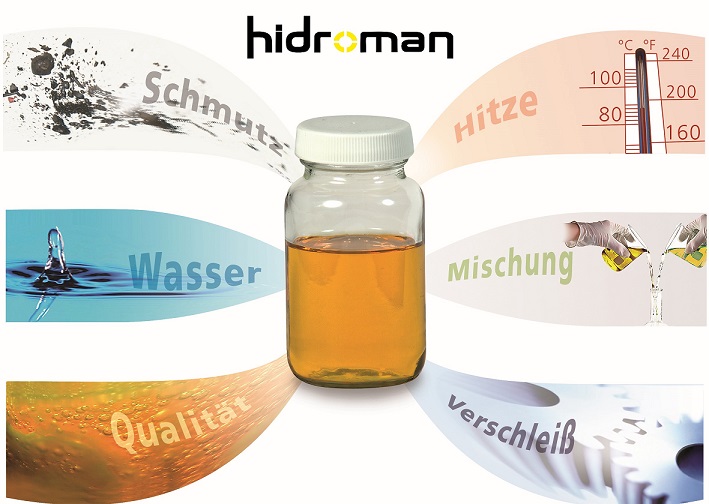
Contamination is one of the major causes of hydraulic component wear and premature equipment failure.
Solid particles, water, and entrained air can reduce hydraulic system performance and contribute to damage in pumps, valves, cylinders, and other components.
Proportional and servo valves are particularly sensitive to hydraulic fluid cleanliness.
To maintain suitable oil cleanliness:
Use filtration systems appropriate for the hydraulic circuit.
Prevent dirt and water from entering the reservoir.
Filter new hydraulic oil before filling the system.
Inspect and replace filter elements according to maintenance requirements.
Monitor oil cleanliness according to ISO 4406.
Use offline filtration and flushing when required.
Mobile Hydraulic Oil Filtration Systems
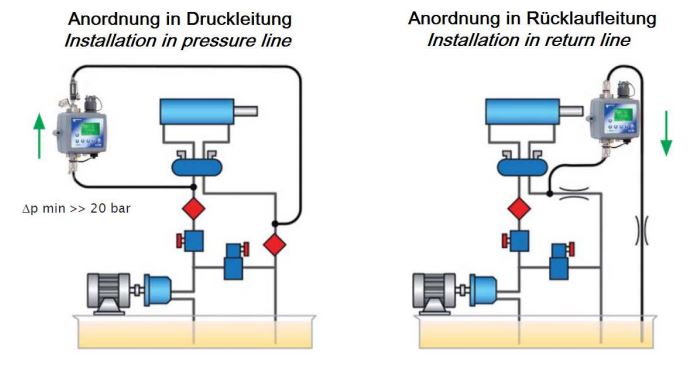
Mobile filtration units clean hydraulic oil through an independent filtration circuit.
They are particularly useful for large hydraulic reservoirs, industrial facilities, mobile equipment, and hydraulic maintenance operations.
Hidroman provides mobile filtration and flushing equipment designed to support contamination control and hydraulic system maintenance.
When Should Hydraulic Oil Be Changed?
Hydraulic oil should not be replaced solely because a fixed number of operating hours has been reached.
Oil service life depends on several factors:
Operating temperature
System pressure and duty cycle
Particle contamination
Water contamination
Oxidation
Hydraulic system design
Fluid formulation
Manufacturer maintenance recommendations
Oil analysis can help determine when replacement is necessary.
Before replacing hydraulic oil, it is also important to evaluate the condition of the reservoir, filters, piping, and other components.
Simply adding new oil may not solve problems caused by existing contamination or accumulated deposits.
How to Choose the Right Hydraulic Oil
Selecting the correct hydraulic oil is essential for maintaining system reliability and equipment service life.
The following factors should be considered:
Hydraulic pump and equipment manufacturer specifications.
Required ISO VG viscosity grade.
Minimum and maximum operating temperatures.
Pump type and operating pressure.
Anti-wear and oxidation resistance requirements.
Compatibility with seals and system materials.
Hydraulic fluid cleanliness requirements.
Environmental conditions, including moisture, dust, and contamination.
Choosing the wrong hydraulic oil can increase maintenance costs and contribute to premature pump, valve, and cylinder failures.
Hidroman Hydraulic Oil Filtration and Maintenance Solutions
Hidroman provides hydraulic equipment and engineering solutions designed to support industrial hydraulic system reliability.
Our solutions address hydraulic oil cleanliness, contamination control, filtration, and maintenance requirements.
Hidroman's hydraulic solutions include:
Mobile hydraulic oil filtration units
Offline filtration systems
Hydraulic system flushing equipment
Hydraulic power units
Hydraulic pump and motor testing systems
Hydraulic maintenance and service solutions
Reliable hydraulic operation depends not only on oil quality but also on maintaining proper fluid cleanliness and operating conditions.
Prevent failures before they happen.
Contact Hidroman for information about hydraulic oil filtration equipment, flushing systems, and industrial hydraulic maintenance solutions.
Frequently Asked Questions About Hydraulic Oil
What does hydraulic oil do?
Hydraulic oil transfers power, lubricates moving components, helps remove heat, and supports protection against wear and corrosion in hydraulic systems.
What is the most commonly used hydraulic oil?
Mineral-based anti-wear hydraulic oils, including HLP-type fluids, are widely used in industrial hydraulic systems. ISO VG 32, 46, and 68 are common viscosity grades for different applications.
What is ISO VG 46 hydraulic oil?
ISO VG 46 is a hydraulic oil viscosity grade with a nominal kinematic viscosity of 46 cSt at 40°C.
What is the difference between ISO VG 32 and ISO VG 46?
ISO VG 32 has a lower nominal viscosity than ISO VG 46. The appropriate grade depends on operating temperature, pump requirements, and equipment manufacturer specifications.
Why does hydraulic oil foam?
Air entering the hydraulic system, incorrect oil selection, improper reservoir oil levels, return-line problems, and contamination can contribute to foam formation.
What happens when water enters hydraulic oil?
Water contamination can cause corrosion, reduced lubrication performance, additive degradation, and filtration problems. The appropriate treatment depends on the contamination level and hydraulic fluid type.
How often should hydraulic oil be changed?
There is no single replacement interval suitable for every hydraulic system. Oil change intervals should be determined using manufacturer recommendations, oil analysis, operating temperature, and contamination levels.
Why is hydraulic oil filtration important?
Filtration helps control solid particle contamination, reducing wear risks in hydraulic pumps, valves, cylinders, and other system components.
What is ISO 4406 hydraulic oil cleanliness?
ISO 4406 is an international cleanliness classification standard used to report solid particle contamination levels in hydraulic fluids according to defined particle size categories.
Related Articles You May Also Be Interested In
What Is Hydraulic Oil Varnish? Causes, Effects, and Solutions
Safe Hydraulic Hose Connections: Installation and Safety Guide
Hydraulic Cylinder Manufacturer | Custom OEM Hydraulic Cylinders