


A hydraulic cylinder is a mechanical actuator that converts hydraulic energy into powerful linear motion. By using pressurized hydraulic fluid, hydraulic cylinders generate the force required to lift, push, pull, clamp, or position heavy loads with exceptional precision and reliability.
Hydraulic cylinders are essential components in hydraulic systems and are widely used in construction, mining, agriculture, marine, manufacturing, material handling, energy, and heavy industrial applications. Their ability to deliver high force in compact dimensions makes them one of the most efficient linear motion solutions available today.
Hydraulic cylinders operate according to Pascal's Law, which states that pressure applied to a confined fluid is transmitted equally in all directions. Hydraulic oil is pumped into one side of the cylinder, creating pressure against the piston. This pressure moves the piston and piston rod, producing controlled linear motion. Reversing the oil flow retracts the piston, completing the operating cycle.
The output force is determined by the following equation:
By increasing either the operating pressure or piston diameter, significantly higher output forces can be achieved.
A typical hydraulic cylinder consists of:
Each component is engineered to withstand high operating pressures while minimizing friction, leakage, and wear.
Depending on the application, hydraulic cylinders are available in several configurations:
Each design offers unique advantages depending on pressure requirements, available installation space, stroke length, mounting style, and operating conditions.
Hydraulic cylinders are used across nearly every industrial sector, including:
Hydraulic cylinders provide numerous operational benefits, including:
Selecting the right materials directly impacts cylinder performance and longevity.
Common materials include:
Material selection depends on pressure rating, operating temperature, environmental conditions, corrosion resistance, and application requirements.
The sealing system is one of the most critical elements of a hydraulic cylinder.
Quality seals help:
Proper seal selection significantly reduces maintenance costs and equipment downtime.
Preventive maintenance extends cylinder life and minimizes unexpected failures.
Recommended maintenance practices include:
Routine inspections help prevent costly breakdowns and maximize equipment availability.
Some of the most common hydraulic cylinder failures include:
Early diagnosis and timely repair can significantly reduce maintenance expenses and extend equipment lifespan.
Selecting the correct hydraulic cylinder requires careful evaluation of:
A properly engineered cylinder improves machine performance, enhances safety, and reduces total ownership costs.
Hidroman manufactures high-performance hydraulic cylinders engineered for demanding industrial and mobile applications. Every cylinder is designed with durability, precision, and efficiency in mind.
Our capabilities include:
With advanced manufacturing technologies, strict quality control procedures, and extensive industry expertise, Hidroman delivers hydraulic cylinder solutions trusted by customers worldwide.
Hidroman is a trusted OEM hydraulic cylinder manufacturer specializing in the design and production of high-performance hydraulic cylinders for industrial and mobile applications. With advanced engineering capabilities, modern manufacturing technologies, and strict quality control processes, we deliver custom hydraulic cylinder solutions tailored to our customers' technical requirements.
Our OEM hydraulic cylinders are engineered for maximum durability, precision, and long service life, making them ideal for construction machinery, agricultural equipment, mining, material handling, marine, steel, recycling, and heavy industrial applications. Every cylinder is manufactured using premium materials, precision-machined components, and high-quality sealing systems to ensure reliable performance even under the most demanding operating conditions.
From prototype development to high-volume production, Hidroman provides complete OEM hydraulic cylinder manufacturing services, supporting global equipment manufacturers with innovative, cost-effective, and reliable hydraulic solutions that meet international quality standards.
What is a hydraulic cylinder used for?
Hydraulic cylinders convert hydraulic pressure into linear force and motion for lifting, pushing, pulling, pressing, and positioning heavy loads.
What is the difference between a single-acting and double-acting hydraulic cylinder?
A single-acting cylinder uses hydraulic pressure in one direction and returns by spring or external force, while a double-acting cylinder uses hydraulic pressure for both extension and retraction.
How long does a hydraulic cylinder last?
With proper maintenance and clean hydraulic fluid, industrial hydraulic cylinders can operate reliably for millions of cycles.
What causes hydraulic cylinder failure?
The most common causes include contaminated hydraulic oil, damaged seals, improper alignment, corrosion, excessive pressure, and inadequate maintenance.
Can hydraulic cylinders be repaired?
Yes. Most hydraulic cylinders can be repaired by replacing seals, piston rods, bearings, or damaged internal components, restoring them to full operating performance.
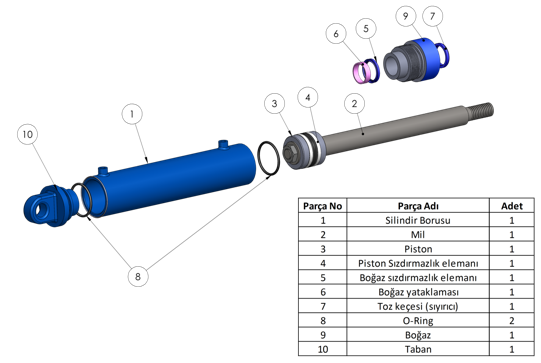
How does a hydraulic cylinder work?
A hydraulic cylinder operates based on the principles of fluid dynamics and pressure transmission. Here's a step-by-step explanation of how it works:
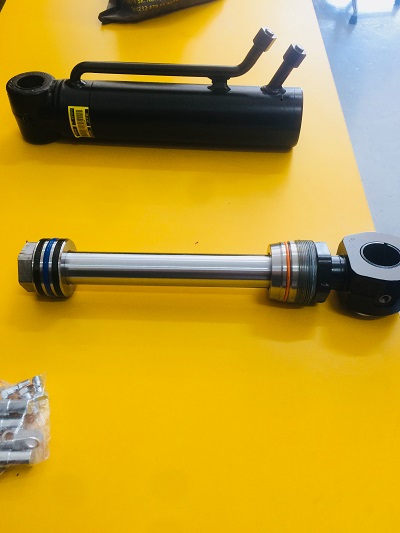
Basic Structure: A hydraulic cylinder consists of a cylindrical barrel, a piston, a piston rod, seals, and ports for hydraulic fluid.
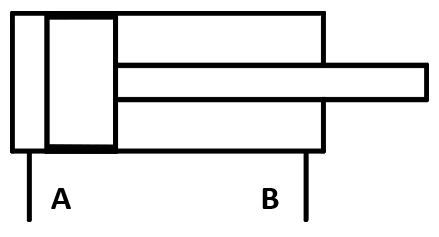
Two Chambers: The inside of the cylinder is divided into two chambers by the piston: the "cap end" and the "rod end." The piston is a disc-shaped component that fits snugly inside the cylinder and can move back and forth.
Hydraulic Fluid: Hydraulic fluid, usually oil, is pumped into one chamber of the cylinder through a port. This pressurizes the fluid in that chamber.
Pressure Transmission: According to Pascal's law, pressure applied to a fluid in a confined space is transmitted undiminished in all directions. So, the pressurized fluid applies force evenly on the piston surface.
Piston Movement: The force exerted by the pressurized fluid on the piston causes it to move linearly within the cylinder. The direction of movement depends on which chamber the fluid is pumped into.
Work Output: The linear motion of the piston's rod can be harnessed to perform work. For example, if the piston is attached to a load, the movement of the piston rod can lift or move that load.
Fluid Transfer: As the piston moves, it displaces hydraulic fluid from one chamber to the other. The fluid in the opposite chamber is allowed to flow out through another port.
Control: The flow of hydraulic fluid into and out of the cylinder is controlled by valves, which regulate the direction, pressure, and speed of movement. This allows for precise control of the cylinder's motion.
Return Stroke: In a double-acting hydraulic cylinder, hydraulic fluid can be pumped into either end of the cylinder to extend or retract the piston. When fluid is pumped into the opposite end, the piston moves in the opposite direction.
Sealing: Seals are essential components of hydraulic cylinders, preventing leakage of hydraulic fluid and maintaining the integrity of the system.
Overall, hydraulic cylinders provide efficient and powerful linear motion by utilizing the pressure of hydraulic fluid to move a piston within a cylinder. They are widely used in various industrial applications due to their reliability, versatility, and ability to generate high forces.
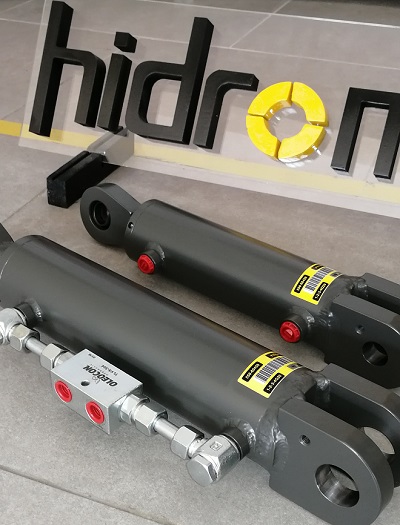
Hydraulic Cylinder Features
»Mounting dimensions and mounting types comply with World standards.
»12 standard mounting types.
»Piston diameter: 40 mm - 800 mm
»Piston rod diameter: 22 mm - 600 mm
»Stroke length up to 6000 mm
Specifications Standards:
Mounting dimensions and mounting types meet the World standard. The piston diameter and piston rod diameter conform to the ISO 3320 standard The test standard is ISO 10100.
Nominal Pressure: 350 Bar (35 MPa)
Test Pressure: 500 Bar (50 MPa)
Optionally, it can be produced with 700 bar (70 MPa) working pressure.
Fluid Type: Mineral oils DIN 51524 HL, HLP.
Liquid Temperature: -20 ° C to +80 ° C
Operating Temperature: -20 ° C to +80 ° C.
Optionally, it can be produced with an operating temperature between -30 ° C and +200 ° C.
Viscosity: 5 cSt - 300 cSt
Piston Speed: Maximum 0.5 m / s.
Cleaning class according to ISO Standard The maximum level of pollution of the hydraulic fluid is ISO 4406 (c) class 20/18/15. Cleaning classes specified for the components in the hydraulic system must be provided. Effective filtering prevents errors and extends component life.
Application Requirements:
»Movement axes and connection points of hydraulic cylinder and piston rod must be mechanically aligned. Lateral loads to the piston rod and piston bearings should be avoided. The weight of the hydraulic cylinder or piston rod must be taken into account.
»Buckling length and buckling load of the piston rod and / or hydraulic cylinder must be taken into consideration.
»Compatibility of sealing elements with liquid must be taken into account at maximum piston speed.
»The maximum working pressure must be observed every time the hydraulic cylinder is operated.
»Negative effects such as aggressive fine particles, vapors, high temperature and compressed air pollution should be avoided.
Manufacturing Materials:
The cylinder pipe is made of honed St52Bk + S material. The piston rod is made of Ck45 material with a surface coated with at least 20 µm hard chrome at f7 tolerance.
Scale:
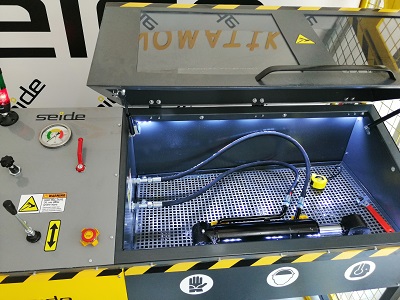
Each cylinder is subjected to internal and external leak test according to the Prepared Ppap File before delivery and in accordance with Hidroman standards and ISO 10100 standards.
Warranty and Service:
Hydraulic cylinders in Hidroman Production are under the warranty of our company for 2 years. In addition, service and spare parts support is provided for 10 years. User-induced errors and errors due to improper working conditions are out of warranty.
Service and repair activities are carried out by Hidroman personnel. In case of any damage that may occur during the assembly of the product to the system and product interventions made by people other than Hidroman personnel for repair and maintenance purposes, the product warranty is canceled.
You can contact us for all kinds of specially designed cylinder demands.
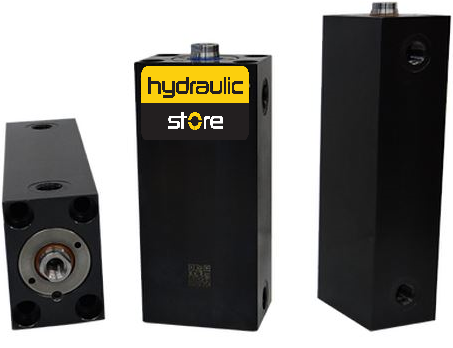
Moulder Rollers Block Rollers
10 separate body structures, connection options.
For the mold and fixture sectors;
Nominal pressure: 250 bar
Test pressure: 300 bar
Max. stroke: 200 mm
Piston Ø: 16 - 100 mm
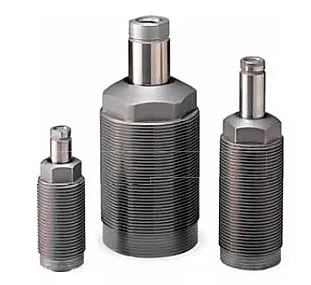
Screw Fixture Rollers
Hydraulic fixture equipment subtab; Finger Cylinders, Rotary Cylinders, Hydraulic Supports
Screw Cylinders.
They are hydraulic cylinders that can be screwed directly to the fixture body.
There are printing and drawing versions.
Single effect, spring return.
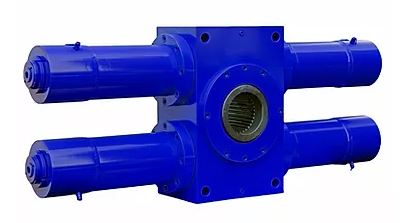
Hydraulic Rotary Actuator Cylinders
8 different piston size options and torque values up to 6750 Nm
These are the cylinders designed according to customer needs and their rotation angles are determined.
Maximum working pressure up to 120 bar with its compact dimensions.
Uygulamaya Özel Çözümler
Yüksek Kaliteli Üretim
Üretim Aşamaları
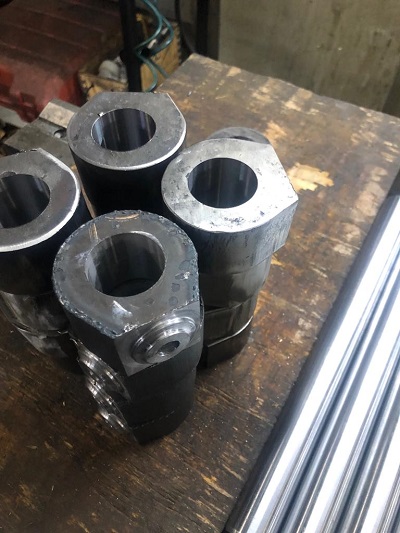
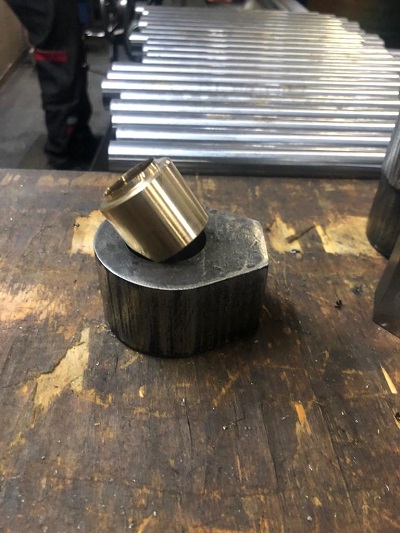
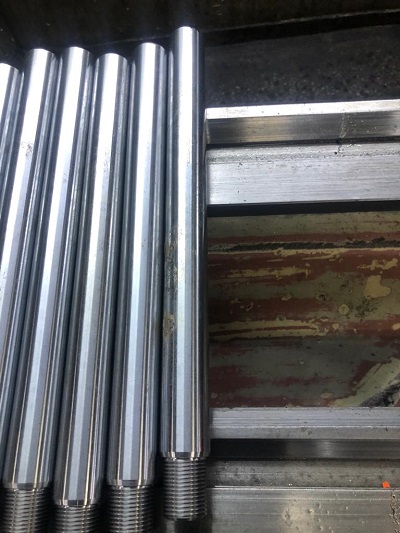
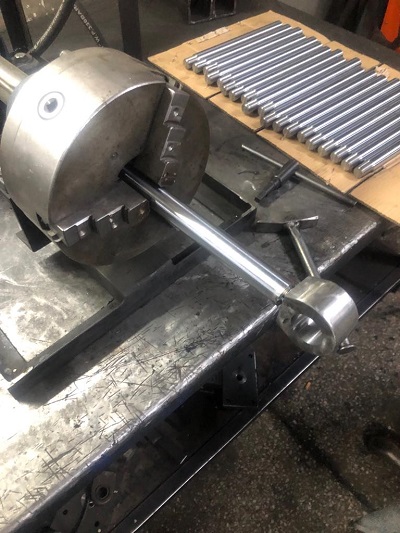
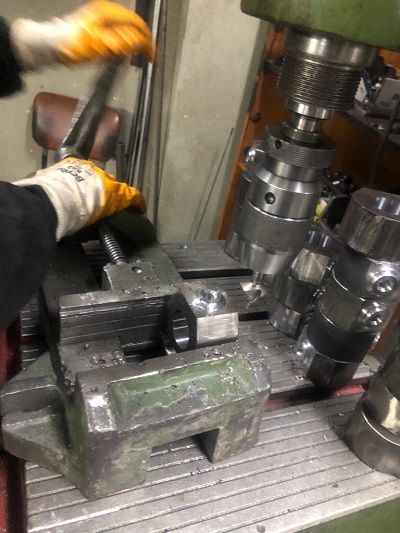
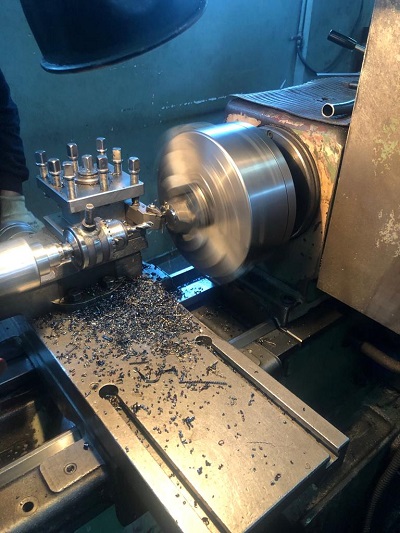
Our industrial hydraulic cylinders are built to work in the toughest conditions. Developing solutions in partnership with our customers has allowed us to continually create and expand our portfolio of hydraulic cylinders that meet global safety standards for any environment you work in.Hidroman has rendered hydraulics even more capable, from mill-type to tie rod hydraulic cylinders; we have your hydraulic cylinder for safe and reliable lifting. This gives you smarter, reliable cost-optimized solutions with an extended lifecycle and intelligent components.
Mill type hydraulic cylinders are heavy-duty hydraulic actuators designed to deliver exceptional performance in the most demanding industrial environments. Their robust construction, high load capacity, and long service life make them the preferred choice for applications that require continuous operation under extreme pressure, shock loads, and harsh working conditions.
Typical applications include:
Hidroman's range of mill type hydraulic cylinders includes both tie-rod (screwed) and welded cylinder designs to meet different application requirements. Welded cylinders feature a compact, space-saving construction while maintaining outstanding structural strength and reliability.
Every Hidroman mill type hydraulic cylinder is engineered for maximum durability and has been rigorously tested to withstand up to 2 million load cycles, ensuring reliable performance, reduced maintenance requirements, and extended service life even in the toughest operating conditions.