Hydraulic Cylinder Repair Bench | Dismantling & Assembly – Hidroman
Hydraulic Cylinder Repair Benches: Professional Equipment for Heavy-Duty Maintenance Workshops
A Controlled and Efficient Way to Disassemble, Service and Reassemble Large Hydraulic Cylinders
When a hydraulic cylinder fails, the repair process often involves much more than replacing a seal. Large cylinders used in construction equipment, mining machinery, cranes and heavy industrial applications can be difficult to dismantle without the right equipment.
Tight connections, high-torque gland nuts, heavy piston rod assemblies and large cylinder bodies can make conventional manual repair methods time-consuming and challenging. Improvised handling and uncontrolled force can also put both technicians and reusable cylinder components at risk.
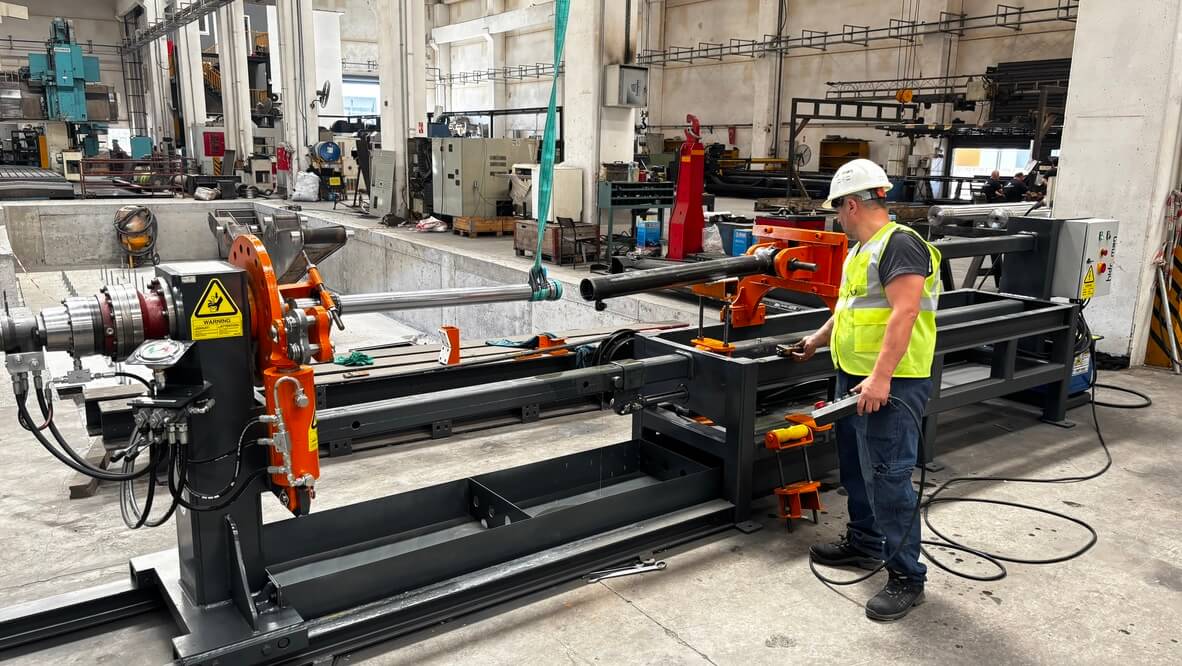
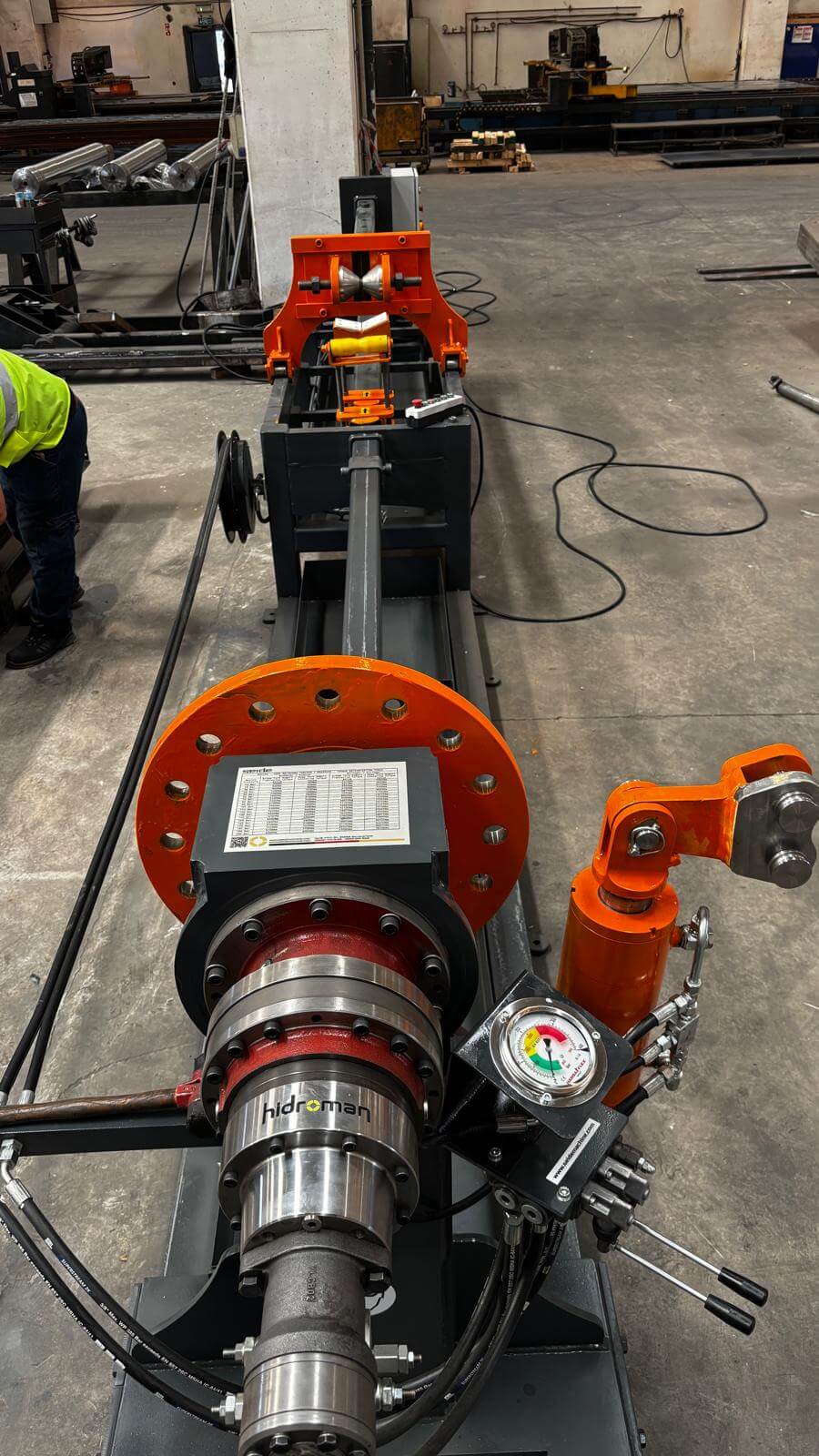
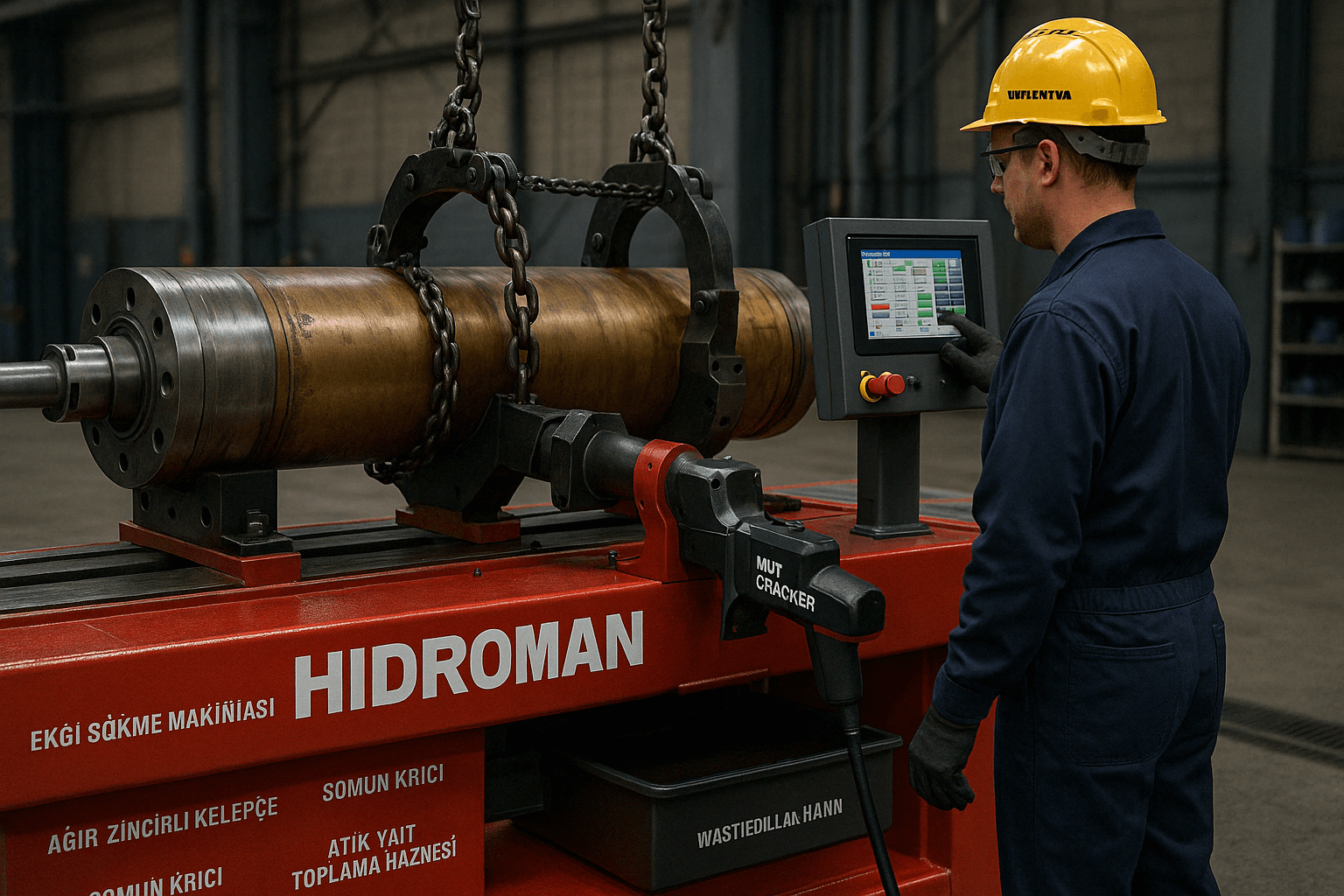
A hydraulic cylinder repair bench provides a dedicated workstation for carrying out cylinder dismantling, inspection, maintenance and reassembly in a more controlled and organized manner.
Hidroman offers hydraulic cylinder repair and dismantling bench solutions for different cylinder sizes, weights and torque requirements. These solutions are intended for hydraulic service workshops, heavy equipment maintenance facilities, mining service centers and industrial operations.
What Is a Hydraulic Cylinder Repair Bench?
A hydraulic cylinder repair bench is specialized workshop equipment designed to support the disassembly, inspection, maintenance and reassembly of hydraulic cylinders.
Its main purpose is to hold the cylinder securely and help operators apply the mechanical force required during servicing in a controlled manner.
With large and heavy-duty cylinders, handling and positioning the assembly can be just as challenging as removing the end connections. A properly selected bench provides a more structured working arrangement for these operations.
Depending on its design and configuration, a cylinder repair bench can support:
Secure positioning and clamping of hydraulic cylinder bodies
Removal of cylinder heads and connection components
Controlled loosening of high-torque connections
Removal of piston rod and piston assemblies
Inspection of seals, O-rings and bearing components
Preparation of cylinder components for repair
Reassembly of hydraulic cylinders
The right equipment should be selected according to more than cylinder dimensions. Connection design, required torque and the actual servicing process also need to be considered.
How Does a Hydraulic Cylinder Dismantling and Assembly Bench Work?
A successful cylinder repair starts with proper preparation. Hydraulic cylinders differ in design, connection methods and service requirements, so the dismantling procedure must follow the cylinder manufacturer's instructions and applicable safety procedures.
A typical service process includes the following stages.
1. Preparing and Positioning the Cylinder
Before servicing, the hydraulic cylinder must be safely disconnected from the machine or hydraulic system. Any trapped hydraulic pressure must be relieved in accordance with the manufacturer's instructions.
The cylinder is then moved onto the bench using suitable lifting and handling equipment. Its body is positioned and secured using the appropriate fixtures and clamping arrangements.
Correct positioning is important for both operator safety and the accuracy of the subsequent operations.
2. Removing the Cylinder Head and Connections
Depending on the cylinder design, the head, gland, retaining nut or other connection components must be removed.
On heavy-duty cylinders, connections may be seized or tightened to high torque values. This can make manual dismantling difficult.
At this stage, the bench's torque capacity and compatible tooling become important. Controlled torque helps operators release connections in a more predictable manner.
3. Removing the Piston Rod and Internal Components
The piston rod assembly and internal components are removed using a method appropriate to the cylinder design.
Particular attention should be given to:
Piston rod and chrome-plated surface
Piston
Cylinder barrel
Front gland and bearing components
Seals and O-rings
Guide and wear rings
Preventing unnecessary damage during disassembly can help preserve reusable parts and control repair costs.
4. Inspection, Troubleshooting and Component Replacement
After disassembly, the cylinder components are cleaned and inspected.
Typical inspection points include piston rod scoring, chrome surface damage, cylinder barrel wear, bearing deformation and deterioration of sealing components.
The inspection determines which components can be reused, repaired or replaced. Parts that no longer meet the required technical condition should be addressed before reassembly.
5. Reassembly
Once the repair work and component replacement are complete, the cylinder is reassembled using suitable seals, connection components and installation procedures.
Manufacturer specifications, assembly methods and required tightening torque values must be followed throughout the process.
6. Final Inspection and Testing
The completed cylinder should undergo the inspections and tests required for its application.
Pressure testing, leakage checks and functional testing are performed according to the cylinder's operating requirements, the applicable test procedure and the available test equipment.
Important: A cylinder dismantling or assembly bench does not automatically include pressure-testing capability. A suitable test unit, connections, protective arrangements and a safe testing procedure must be evaluated separately.
Why Use a Professional Hydraulic Cylinder Repair Bench?
The value of a cylinder repair bench is not simply that it makes dismantling easier. For workshops that regularly service hydraulic cylinders, it can help organize the entire maintenance workflow and support higher service capacity.
More Controlled and Safer Operations
Dismantling heavy hydraulic cylinders using manual methods can create challenges related to handling, positioning and force application.
A bench selected for the correct application helps support the cylinder securely and provides a more controlled working arrangement. Suitable guards, clamping systems and safe operating procedures are also essential for managing operator risks.
A More Organized Service Workflow
Moving, repositioning and securing cylinders with different equipment can add unnecessary steps to the maintenance process.
A suitable repair bench provides a dedicated work area where dismantling and reassembly operations can be carried out in a more systematic way.
High Torque for Heavy-Duty Connections
Large hydraulic cylinders may have oversized connections and tightly secured end caps that require substantial torque during removal.
For this reason, torque capacity should be considered alongside cylinder weight and working dimensions when selecting a bench.
Hidroman's high-torque cylinder dismantling bench solutions are developed for demanding heavy-duty maintenance applications.
More Consistent Repair Procedures
Controlled disassembly and reassembly help maintenance teams follow more consistent service procedures.
When combined with proper inspection, suitable replacement parts and documented final checks, this approach makes service quality easier to monitor.
Better Maintenance Cost Management
Accurate troubleshooting and controlled dismantling can help preserve components that remain suitable for reuse.
This may reduce unnecessary part replacement and repeated repair work. Improved workshop capacity can also help businesses reduce dependence on external service providers and respond to customer requirements more efficiently.
Industries That Use Hydraulic Cylinder Repair Benches
Hydraulic cylinder repair benches are suitable for a wide range of industries where cylinder maintenance and overhaul are regular requirements.
Mining and quarrying
Used for servicing heavy-duty cylinders found in excavators, loaders, rock-breaking systems and other mining machinery.
Construction and heavy equipment service
Supports the dismantling, maintenance and assembly of cylinders used in excavators, dozers, graders, wheel loaders, dump trucks and cranes.
Heavy industry and manufacturing
Helps maintenance teams service cylinders used in industrial presses, production lines, lifting systems and heavy hydraulic machinery.
Construction and infrastructure
Can be used for cylinder maintenance on cranes, mobile lifting equipment and infrastructure machinery.
Agricultural machinery
Suitable for servicing cylinders used in tractors, agricultural equipment and hydraulic attachments, subject to bench capacity.
Marine and specialized machinery
With suitable dimensions and capacity, repair benches can support maintenance of hydraulic cylinders used in marine equipment, deck machinery and specialized hydraulic systems.
Each industry has different maintenance requirements. The bench should therefore be selected according to the actual cylinder portfolio and workload of the workshop.
How to Choose the Right Hydraulic Cylinder Repair Bench
Selecting a hydraulic cylinder repair bench requires more than comparing prices or maximum torque ratings. The equipment must match both current and anticipated service requirements.
1. Maximum Cylinder Length
Determine the longest cylinder that the workshop needs to service. The bench's working length must allow safe positioning and access during maintenance operations.
2. Cylinder Diameter and Clamping Range
If the workshop handles cylinders with different body diameters, the clamping system must accommodate the required size range.
3. Handling and Load Capacity
Cylinder bodies and piston rod assemblies can be extremely heavy. The bench's load capacity should be evaluated together with the lifting and support equipment used in the workshop.
4. Torque Capacity
The torque required for dismantling and reassembly depends on the cylinder's connection design. Adequate torque capacity is particularly important when servicing large, heavy-duty cylinders.
5. Clamping and Control System
The cylinder must remain securely positioned during operation. The control system should allow operators to manage the equipment and apply the required force in a controlled manner.
6. Operator Safety
Protective arrangements, emergency stop functions, safe working zones and appropriate operating procedures should all be considered.
7. Future Service Requirements
Do not base the investment decision only on the cylinders currently in your workshop. Consider whether you may need to service larger or different cylinder designs in the future.
| Selection criterion | Information to evaluate |
|---|---|
| Cylinder length | Maximum service length |
| Cylinder diameter | Minimum and maximum barrel diameter |
| Cylinder weight | Maximum handling requirement |
| Torque capacity | Required dismantling and assembly torque |
| Connection design | End cap, gland nut and connection type |
| Clamping system | Secure positioning of the cylinder body |
| Control system | Operator control and safe operation |
| Service capacity | Expected daily or monthly workload |
Hidroman Hydraulic Cylinder Repair and Dismantling Bench Solutions
Hidroman offers cylinder repair and dismantling bench solutions in different capacities and configurations for heavy-duty hydraulic cylinder servicing.
Developed under the Seide brand, Hidroman's cylinder dismantling bench solutions are designed to address demanding maintenance operations, particularly those requiring high torque.
They can be evaluated for applications in:
Hydraulic service and repair workshops
Construction equipment maintenance facilities
Mining equipment service centers
Heavy industrial maintenance departments
The appropriate model depends on several application-specific factors:
Maximum cylinder length
Cylinder body diameter and weight
Required dismantling and assembly torque
Clamping and connection arrangements
Workshop service capacity
Operator safety and operating conditions
Hidroman's high-torque models provide solutions for heavy-duty cylinder applications where conventional manual dismantling methods may not be sufficient.
The best way to select a bench is to evaluate the actual technical requirements of the cylinders being serviced, rather than relying on a single catalog specification.
What Does a Cylinder Repair Bench Investment Mean for Your Workshop?
For a hydraulic service workshop, a cylinder repair bench is more than an additional machine. It is an investment in the way maintenance operations are organized and performed.
With appropriately selected equipment, a workshop can:
Carry out dismantling and assembly in a more controlled manner.
Reduce manual intervention when handling heavy cylinders.
Organize service procedures more efficiently.
Help preserve components that remain suitable for reuse.
Improve its maintenance and repair capacity.
Respond to customer requirements more effectively.
Manage workplace risks through suitable equipment and procedures.
The actual return on investment depends on workshop workload, labor costs, dependence on external service providers, equipment capacity and utilization. A business-specific evaluation is recommended before making a purchasing decision.
Frequently Asked Questions About Hydraulic Cylinder Repair Benches
What is a hydraulic cylinder repair bench used for?
A hydraulic cylinder repair bench is used to support cylinder disassembly, inspection, maintenance and reassembly. It provides secure positioning and helps operators apply the required mechanical force in a controlled manner.
Is a cylinder repair bench the same as a cylinder dismantling bench?
The terms are often used interchangeably. However, a dismantling bench focuses primarily on controlled disassembly, while a repair bench may support a wider maintenance and assembly workflow. Actual capabilities depend on the equipment's design and configuration.
What types of cylinders can be serviced on a repair bench?
Depending on working length, diameter range, load capacity and torque rating, a bench may be suitable for cylinders used in excavators, loaders, cranes, dump trucks, mining equipment, agricultural machinery and industrial hydraulic systems.
Why is torque capacity important?
Cylinder end caps, gland nuts and other connections may require significant torque to loosen or tighten. Adequate torque capacity helps ensure that these operations can be performed in a controlled manner.
Can a hydraulic cylinder repair bench perform pressure testing?
This depends on the equipment configuration. A dismantling and assembly bench is different from a hydraulic pressure test unit. The required test equipment, connections, protective arrangements and procedures must be evaluated separately.
How do I choose the right hydraulic cylinder repair bench?
Start by identifying the maximum cylinder length, diameter, weight, required dismantling torque and connection design. Workshop workload, operator safety and future service requirements should also be considered.
How can I request a quotation from Hidroman?
Share the dimensions, maximum weight, required torque and intended applications of the cylinders you plan to service. Hidroman can then evaluate suitable bench models and technical configurations.
Find the Right Hydraulic Cylinder Service Solution with Hidroman
The right equipment makes a measurable difference in the way heavy-duty hydraulic cylinders are serviced.
Hidroman provides cylinder repair and dismantling bench solutions for businesses looking to improve their workshop capabilities and manage demanding maintenance operations more effectively.
Share your cylinder dimensions, weight and required torque with our team. We can help evaluate the bench options that best match your application.
Hidroman – Engineering Solutions for Heavy-Duty Hydraulic Maintenance.
You May Also Be Interested In