


A hydraulic pump is a key component that converts mechanical energy into hydraulic fluid flow. Driven by an electric motor, an internal combustion engine, or another mechanical power source, it draws hydraulic fluid from a reservoir and delivers it into the hydraulic circuit.
Hydraulic pumps are used in industrial machinery, mobile equipment, agricultural machinery, presses, lifting systems, and hydraulic power units. Selecting the right pump affects system performance, energy consumption, operating accuracy, and maintenance costs.
Hydraulic pumps transfer fluid by creating a change in volume inside the pumping mechanism. Moving components draw hydraulic oil through the inlet and deliver it to the outlet, supplying the flow required by the hydraulic circuit.
An important distinction is that a hydraulic pump primarily supplies flow; system pressure develops when the fluid encounters resistance from the load and circuit components. The pressure and flow available depend on the pump design and operating conditions.
Pump flow affects the speed of hydraulic cylinders and motors. System pressure is related to the force or torque required to move the load.
The three most common hydraulic pump designs are gear pumps, vane pumps, and piston pumps. Screw pumps and manually operated hydraulic pumps are also used in specific applications.
Gear pumps are positive-displacement pumps that move hydraulic fluid from the inlet to the outlet through the movement of meshing gears. Their relatively simple construction, compact design, and cost-effective operation make them common in many hydraulic applications.
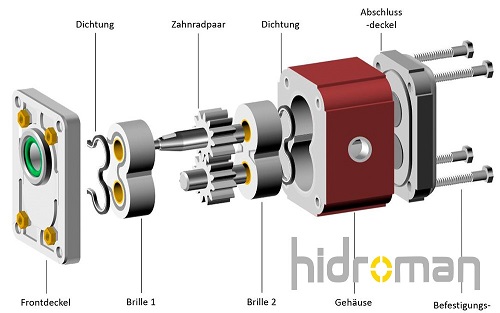
The two main gear pump configurations are:
External gear pumps: These pumps use two external gears to transport fluid. They are commonly used in mobile hydraulics, agricultural machinery, lubrication circuits, and hydraulic power units.
Internal gear pumps: These pumps use an internal gear arrangement to move fluid. Depending on the design, they can provide low-noise operation and consistent flow characteristics. They may be suitable for industrial hydraulic systems where noise levels are an important consideration.
When selecting a gear pump, evaluate the required flow rate, operating pressure, rotational speed, fluid viscosity, inlet conditions, and the manufacturer's operating limits.
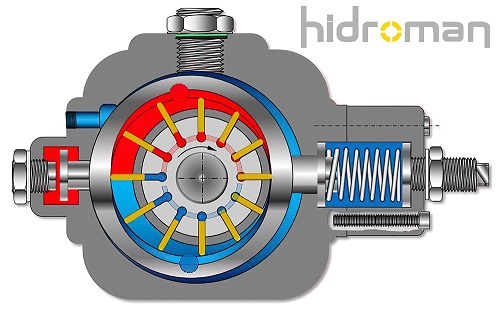
Vane pumps use movable vanes mounted in a rotor. As the rotor turns, changes in the volume between the vanes and the pump housing draw fluid into the inlet and carry it toward the outlet.
Depending on the design, vane pumps may have fixed or variable displacement. They are used in machine tools, industrial machinery, and selected stationary hydraulic systems where suitable flow characteristics, noise performance, and maintenance requirements are important.
Pump suitability depends on operating pressure, fluid cleanliness, temperature, rotational speed, and the manufacturer's specifications.
Piston pumps move hydraulic fluid through the reciprocating motion of pistons within cylinders. Their high power density, high-pressure capability in suitable designs, and availability of variable-displacement configurations make them useful in demanding hydraulic applications.
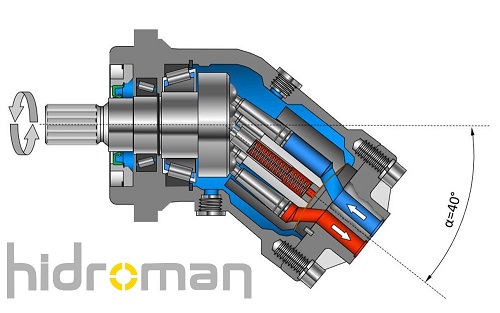
Piston pumps are generally divided into two main categories:
Axial piston pumps: The pistons move parallel to the drive shaft axis. Common designs include swashplate and bent-axis configurations. Some models offer adjustable displacement, allowing the pump flow to be adapted to system demand.
Radial piston pumps: The pistons move radially around a central axis or shaft. Depending on their design, these pumps can be used in industrial applications requiring high pressure.
Piston pumps may be considered for presses, heavy industrial machinery, high-pressure hydraulic circuits, and systems requiring variable-flow control. Always verify the pressure, flow, speed, and duty-cycle limits in the specific model's technical documentation.
Screw pumps use rotating screw elements to transport fluid continuously. Under suitable operating conditions, they can provide low-vibration and quiet operation.
They may be used for oil transfer, circulation, and selected industrial fluid-handling applications. Selection should take into account fluid viscosity, required flow, pressure, temperature, and the operating characteristics of the system.
Hand-operated hydraulic pumps use manual force rather than an electric motor or combustion engine. They are used in portable hydraulic equipment, emergency applications, and certain high-pressure tools.
The achievable pressure and flow depend on the pump design and lever mechanism. The required pressure, fluid volume, and frequency of use should all be considered during selection.
Hydraulic pumps can be classified by both their mechanical design and their displacement characteristics.
Fixed-displacement pumps: These pumps have a fixed theoretical fluid volume per shaft revolution. At a given rotational speed, theoretical flow depends on the pump's geometric displacement. Gear pumps are commonly available in this category.
Variable-displacement pumps: These pumps can change the amount of fluid displaced per revolution within their designed operating range. This allows the delivered flow to be adjusted to suit system requirements. Variable-displacement axial piston pumps are a common example.
A variable-displacement pump does not automatically guarantee energy savings. Actual savings depend on pump control, load profile, circuit design, and the drive system.
The theoretical flow rate of a hydraulic pump is determined by its displacement and rotational speed.
Theoretical flow formula:
Q = Vg × n / 1,000
Where:
Q = Theoretical flow rate (L/min)
Vg = Pump displacement (cm³/rev)
n = Pump speed (rpm)
For example, a pump with a displacement of 20 cm³/rev running at 1,500 rpm has a theoretical flow rate of:
Q = 20 × 1,500 / 1,000 = 30 L/min
Actual flow may be lower because of volumetric losses and operating conditions. Use manufacturer performance data when selecting a pump for a real hydraulic system.
Choosing the correct hydraulic pump requires an evaluation of the system's operating requirements and environmental conditions.
Operating pressure: Determine the normal and maximum system pressure requirements.
Required flow rate: Calculate the flow needed to achieve the desired cylinder or hydraulic motor speed.
Displacement and rotational speed: Match pump displacement to the drive motor's speed and system requirements.
Hydraulic fluid properties: Check viscosity, operating temperature, and fluid compatibility.
Inlet conditions: Evaluate inlet line diameter and length, reservoir level, filter condition, and reservoir ventilation.
Drive compatibility: Confirm compatibility with the electric motor, combustion engine, or other prime mover.
Efficiency and energy consumption: Consider volumetric and mechanical efficiency as part of overall system performance.
Noise and vibration: Select a design suitable for the operating environment.
Mounting and connections: Verify shaft, flange, rotation direction, and hydraulic port compatibility.
Maintenance and serviceability: Consider spare parts availability, maintenance requirements, and expected service life.
Total operating cost: Evaluate purchase price alongside energy use, maintenance, and downtime.
Duty cycle: Account for continuous operation, intermittent operation, and short-duration peak loads.
Correct pump selection is only one part of reliable hydraulic system operation. Installation, fluid cleanliness, and operating conditions also affect pump life.
Confirm the required direction of rotation before starting the pump.
Follow the manufacturer's instructions for priming, lubrication, and filling the inlet line before initial operation.
Monitor reservoir oil level and fluid condition.
Use suitable filtration and maintain filters at the recommended intervals.
Inspect the inlet line for restrictions, excessive pressure losses, or air ingress.
Ensure that fluid viscosity and temperature are within the pump's permitted operating range.
Investigate unusual noise, vibration, overheating, or reduced performance promptly.
Do not operate the pump beyond its rated pressure, speed, or duty limits.
Poor inlet conditions, contaminated fluid, inadequate lubrication, and incorrect installation can contribute to wear, reduced efficiency, and pump damage. When a pump fails repeatedly, investigate the hydraulic system and operating conditions rather than replacing the component without identifying the cause.
A hydraulic pump converts mechanical energy into hydraulic energy by supplying fluid flow to the circuit. A hydraulic motor converts hydraulic energy from pressurized fluid into rotational mechanical motion and torque.
The two components therefore perform different functions. Some machines can use specially designed pump-motor units for bidirectional energy conversion, but this capability depends on the specific design and must be confirmed in the manufacturer's documentation.
The three most common types are gear pumps, vane pumps, and piston pumps. Screw pumps and hand-operated hydraulic pumps are also used for specific applications.
Piston pumps are frequently considered for high-pressure applications. The correct model must be selected according to the required pressure and flow, duty cycle, and manufacturer specifications.
A hydraulic pump supplies fluid flow. Pressure develops when the fluid encounters resistance from the load and hydraulic circuit.
A fixed-displacement pump has a fixed theoretical displacement per revolution. A variable-displacement pump can adjust its displacement within its designed operating range.
Key information includes operating pressure, required flow, rotational speed, fluid type and viscosity, operating temperature, drive arrangement, mounting dimensions, and duty cycle.
Selecting the right hydraulic pump requires a clear understanding of system pressure, flow demand, operating conditions, and application requirements. Proper component selection supports reliable operation, efficient energy use, and manageable maintenance costs.
Explore the related Hidroman resources below for additional information about hydraulic pump performance, fluid cleanliness, and hydraulic system calculations.
Hidroman provides engineering-focused information and hydraulic solutions to support equipment selection and hydraulic system performance.