


Hydraulic Hoses: Types, Pressure Ratings & Selection | Hidroman
What Are Hydraulic Hoses? Types, Construction, Pressure Ratings and Selection Guide
Hydraulic hoses are flexible, reinforced fluid-carrying components designed to transfer pressurized hydraulic oil between pumps, valves, hydraulic cylinders, motors, and other system components.
They play a critical role in the performance, safety, and reliability of industrial and mobile hydraulic systems.
Hydraulic hoses are widely used in construction equipment, mining machinery, agricultural equipment, steel manufacturing, marine systems, and industrial production facilities.
Depending on their design, hydraulic hoses are engineered to withstand high operating pressures, temperature variations, mechanical abrasion, vibration, and demanding environmental conditions.
Selecting the correct hydraulic hose involves more than matching the hose to the system pressure. Fluid compatibility, operating temperature, flow rate, minimum bend radius, fitting type, and pressure surges must also be considered.
Hidroman provides hydraulic hose manufacturing, hose assembly, fittings, internal hose cleaning, and pressure testing solutions for industrial and mobile hydraulic applications.
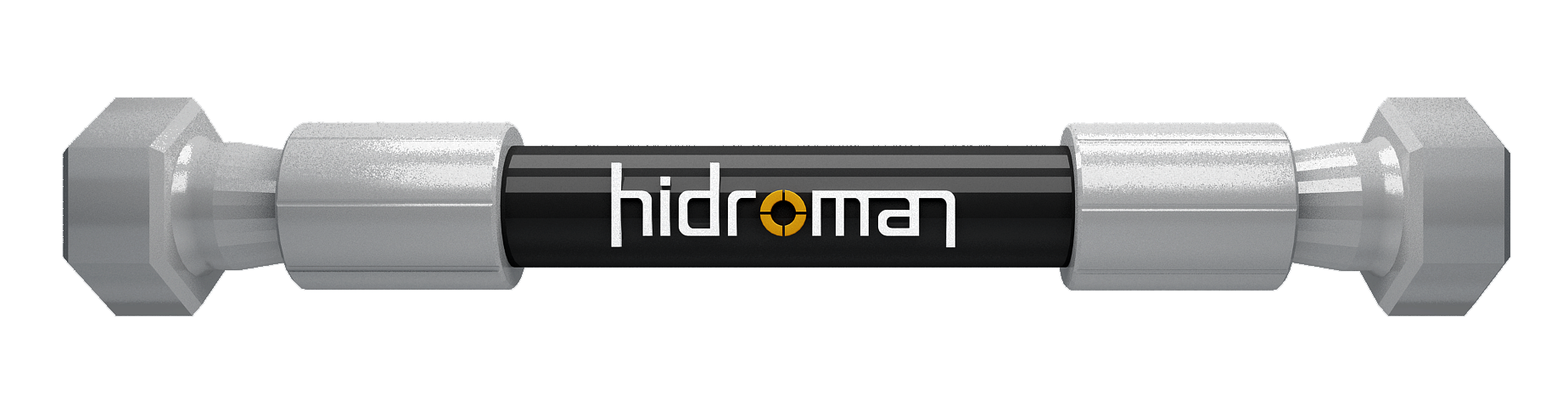
1. What Is a Hydraulic Hose and How Does It Work?
A hydraulic hose is a flexible, reinforced tube designed to transfer pressurized hydraulic fluid from one component to another.
In a hydraulic power system, the pump pressurizes hydraulic oil and delivers it through hoses to directional control valves and actuators. Hydraulic cylinders convert this energy into linear motion, while hydraulic motors produce rotary motion.
Hydraulic hoses are particularly important in applications involving moving components, vibration, flexible connections, and installations where rigid piping is impractical.
The main functions of hydraulic hoses include:
Transferring pressurized hydraulic fluid safely.
Connecting moving hydraulic components.
Accommodating machine movement and vibration.
Withstanding the required operating pressure.
Preventing fluid leakage and external contamination.
Maintaining reliable performance under specified temperature conditions.
2. Hydraulic Hose Construction and Layers
Hydraulic hoses are manufactured using different materials and reinforcement structures depending on their intended application and pressure requirements.
A conventional reinforced rubber hydraulic hose generally consists of three main layers.
2.1. Inner Tube
The inner tube is the layer that comes into direct contact with the hydraulic fluid.
Its primary function is to provide a fluid-compatible, leak-resistant passage for hydraulic oil.
Inner tube materials must be selected according to:
Hydraulic fluid composition
Operating temperature
Fluid viscosity
Oil additives
Long-term operating conditions
The inner tube must be chemically compatible with the fluid being conveyed. Not every rubber or thermoplastic compound is suitable for every hydraulic fluid.
2.2. Reinforcement Layer
The reinforcement layer provides the structural strength required to withstand internal hydraulic pressure.
Depending on the hose design, reinforcement may consist of braided steel wire or spiral-wound steel wire.
Common reinforcement types include:
Single-wire braid
Two-wire braid
Multiple-wire braid
Spiral steel wire reinforcement
Textile reinforcement
Braided hoses are widely used in general industrial and mobile hydraulic systems, while spiral-reinforced hoses are commonly designed for demanding, high-pressure applications.
The reinforcement structure is one of the main factors determining a hydraulic hose's pressure rating, impulse resistance, and flexibility.
2.3. Outer Cover
The outer cover protects the hose against external environmental and mechanical damage.
Common protection requirements include:
Abrasion resistance
Ozone and weather resistance
UV resistance
Water and moisture resistance
Application-specific chemical resistance
Protection against mechanical damage
Heavy-duty hydraulic applications, such as mining and construction, may require hoses with enhanced abrasion-resistant covers.
3. Types of Hydraulic Hoses
Hydraulic hoses are classified according to their reinforcement construction, pressure rating, material composition, and intended application.
3.1. Single Wire Braided Hydraulic Hoses
Single-wire braided hoses are commonly used in industrial and mobile hydraulic applications requiring medium to high operating pressures.
Key characteristics include:
Flexible construction
Single steel wire braid
Compact design
General-purpose hydraulic applications
Suitability for moving machinery connections
3.2. Two-Wire Braided Hydraulic Hoses
Two-wire braided hoses are designed for applications requiring higher pressure capabilities and mechanical strength.
Typical applications include:
Construction equipment
Industrial hydraulic presses
Mining machinery
Heavy-duty mobile hydraulic systems
3.3. Spiral Reinforced Hydraulic Hoses
Spiral steel wire reinforced hoses are designed for demanding high-pressure hydraulic applications.
They are commonly used in:
Large excavators
Mining equipment
Hydraulic rock breakers
Heavy construction machinery
Industrial hydraulic power systems
The spiral reinforcement structure provides the strength required for specific high-pressure and high-impulse applications.
3.4. Thermoplastic Hydraulic Hoses
Thermoplastic hydraulic hoses are manufactured using specialized thermoplastic inner and outer layers.
Depending on the application, they may incorporate textile or synthetic reinforcement.
Key advantages can include:
Lightweight construction
Compact design
Small minimum bend radius in selected models
Resistance to certain chemicals
Suitability for specialized hydraulic applications
3.5. Stainless Steel Braided Flexible Hoses
Stainless steel braided flexible hoses can be used in applications requiring corrosion resistance, elevated temperature performance, or compatibility with specific fluids, depending on the inner hose material.
They should not be confused with conventional rubber hydraulic hoses reinforced with carbon steel wire.
4. Hydraulic Hose Pressure Ratings
Operating pressure is one of the most important parameters when selecting a hydraulic hose.
The hose's rated working pressure must meet the maximum pressure requirements of the hydraulic application.
Three important pressure ratings are commonly referenced:
Working Pressure: The maximum pressure at which the hose is designed to operate continuously under specified conditions.
Proof Pressure: The pressure applied during a specified test procedure to verify hose integrity.
Burst Pressure: The pressure at which the hose fails during a destructive laboratory test.
Burst pressure must never be treated as an allowable operating pressure.
When selecting a hydraulic hose assembly, the pressure ratings of all components must be checked, including the hose, fittings, adapters, and connections.
The complete assembly must be suitable for the application's maximum operating pressure and pressure transients.
5. Hydraulic Hose Sizes and Inside Diameter Selection
Hydraulic hose inside diameter directly affects fluid flow velocity and pressure loss.
Selecting an incorrect hose diameter can result in:
Excessive fluid velocity
Increased pressure drop
Higher oil temperatures
Energy losses
Noise and vibration
Reduced hose and component service life
Hose diameter should be selected according to system flow rate and the target fluid velocity.
The basic flow velocity equation is:
v = Q / A
Where:
v = Fluid velocity (m/s)
Q = Flow rate (m³/s)
A = Internal cross-sectional area (m²)
For a circular hose:
A = π × d² / 4
Where d represents the hose inside diameter.
Different flow velocity targets should be considered for pressure lines, return lines, and suction lines. Final values depend on system design, fluid viscosity, and equipment manufacturer recommendations.
6. How to Select the Right Hydraulic Hose
Correct hose selection is essential for hydraulic system reliability and operational safety.
Operating Pressure
The hose working pressure must meet the system's normal and transient pressure requirements.
Pressure spikes and pulsations should also be considered.
Temperature Range
The hose must be compatible with both the hydraulic fluid temperature and the surrounding ambient temperature.
For high-temperature industrial applications, the inner tube and outer cover materials must be carefully selected.
Fluid Compatibility
The hose inner tube must be chemically compatible with the hydraulic oil or other fluid being conveyed.
Minimum Bend Radius
Every hydraulic hose has a manufacturer-specified minimum bend radius.
Installing a hose below this limit can damage its internal structure and reduce its service life.
Abrasion and Environmental Resistance
The installation environment should be evaluated for friction, impact, vibration, chemical exposure, and UV radiation.
Protective sleeves, spiral guards, and abrasion-resistant covers may be required.
Fitting and Connection Compatibility
Hose end fittings must match the adapters and hydraulic components used in the system.
Common connection standards include BSP, JIC, ORFS, DIN, and SAE flange connections.
7. SAE and International Hydraulic Hose Standards
Hydraulic hoses are manufactured and tested according to different international standards that define their construction and performance requirements.
Important standards include:
SAE J517: A widely used American standard covering hydraulic rubber hose specifications. Its 100R series identifies different hose constructions and performance requirements.
ISO 18752: Defines performance requirements and classifications for hydraulic hoses.
EN 853: Covers specified types of rubber hydraulic hoses with wire braid reinforcement.
EN 856: Covers spiral wire reinforced rubber hydraulic hoses.
EN 857: Covers compact hydraulic hose types.
Hose selection should be based on the applicable standard edition, the manufacturer's technical datasheet, and the requirements of the actual application.
8. Hydraulic Hose Fittings and Connections
The reliability of a hydraulic hose assembly depends on the correct selection and installation of its fittings as well as the hose itself.
Common hydraulic hose connection types include:
BSP connections
JIC 37-degree flare connections
ORFS connections
DIN metric connections
SAE flange connections
NPT connections
Incorrect thread selection, incompatible sealing surfaces, or improper assembly can result in fluid leakage, loose connections, and premature hose assembly failure.
Fitting selection should consider thread type, sealing design, pressure rating, hose size, and connection orientation.
9. How Are Hydraulic Hose Assemblies Manufactured?
Hydraulic hose assembly manufacturing is a controlled process that begins with selecting the correct hose and compatible fittings.
A professional hose assembly process generally includes the following steps:
Selecting the appropriate hose type for the application.
Determining the correct inside diameter and assembly length.
Cutting the hose with a suitable hydraulic hose cutting machine.
Performing skiving when required by the hose and fitting specification.
Selecting the correct fittings and ferrules.
Crimping the assembly using the specified crimping diameter.
Measuring and inspecting the crimped connection.
Cleaning the internal hose passage.
Performing applicable pressure and leakage tests.
Recording product identification, pressure information, and traceability data.
Crimping diameter must follow the hose and fitting manufacturer's specifications.
Using the correct crimping machine alone is not sufficient. The correct dies, fittings, ferrules, and crimp dimensions are equally important.
10. Why Is Hydraulic Hose Internal Cleaning Important?
Particles and debris can remain inside hydraulic hoses following manufacturing, cutting, skiving, and assembly operations.
If these contaminants enter a hydraulic system, they can damage pumps, valves, and precision hydraulic components.
Professional hose cleaning may include:
Internal inspection after cutting and assembly
Removal of manufacturing particles using an appropriate cleaning method
Visual inspection after cleaning
Particle contamination checks when required
Protecting hose ends with suitable caps
Specialized hydraulic hose cleaning machines can use cleaning projectiles and compressed air to remove internal debris.
Hidroman provides Jetcleaner technology and professional hose cleaning equipment for hydraulic hose internal cleaning applications.
11. Hydraulic Hose Testing and Quality Control
Hydraulic hose assemblies should undergo appropriate inspection and testing before being released for service.
Common quality control procedures include:
Visual Inspection: Checking for cuts, cracks, deformation, and assembly defects.
Crimp Inspection: Measuring the crimp diameter and verifying fitting geometry.
Leak Testing: Inspecting the hose assembly for leakage under an appropriate test procedure.
Pressure Testing: Applying the specified test pressure according to the applicable standard and customer requirements.
Traceability: Recording hose type, fittings, manufacturing date, test results, and product identification.
Pressure testing must be performed using suitable protective enclosures and controlled safety procedures.
High-pressure fluid injection injuries can be extremely serious. Proper safety precautions are essential during all hydraulic hose testing operations.
12. Common Hydraulic Hose Failures and Their Causes
Hydraulic hose failures can lead to equipment downtime, fluid loss, and serious safety hazards.
Outer Cover Abrasion
Repeated contact with nearby surfaces can damage the hose outer cover.
Recommended actions:
Review and improve hose routing.
Install suitable protective sleeves.
Replace hoses when damage compromises their integrity.
Hose Swelling
Hose swelling can result from inner tube deterioration, fluid incompatibility, or operating conditions exceeding the hose specifications.
Recommended actions:
Check fluid compatibility.
Review operating pressure and temperature.
Replace the damaged hose assembly.
Hydraulic Hose Burst
Excessive pressure, incorrect hose selection, pressure spikes, or mechanical damage can cause hose failure.
Recommended actions:
Verify system pressure settings.
Check the hose working pressure rating.
Inspect fittings and connections.
Replace unsuitable or damaged assemblies.
Leakage Around Hose Fittings
Incorrect crimping, incompatible fittings, improper installation, or damaged sealing surfaces can cause leakage.
Recommended actions:
Verify hose and fitting compatibility.
Check crimp dimensions.
Reassemble or replace the damaged assembly according to the manufacturer's procedure.
Hose Cracking and Hardening
Aging, high temperatures, ozone exposure, and fluid incompatibility can deteriorate hose materials.
Recommended actions:
Evaluate operating conditions.
Select suitable hose materials.
Replace cracked or hardened hoses.
Safety warning: Never use your hand to locate a hydraulic oil leak under pressure. High-pressure hydraulic fluid can penetrate the skin and cause severe injection injuries. Always isolate and safely depressurize the system before inspection.
13. Hydraulic Hose Maintenance and Replacement
Hydraulic hose service life depends on operating pressure, temperature, vibration, environmental conditions, hose quality, and maintenance practices.
Recommended inspection activities include:
Checking hose outer covers.
Inspecting for leaks and loose fittings.
Monitoring abrasion and deformation.
Maintaining the specified minimum bend radius.
Avoiding excessive heat and chemical exposure.
Securing hoses correctly.
Following manufacturer inspection and replacement recommendations.
Hoses showing visible damage should not remain in service simply because they have not reached a particular operating age.
14. Industrial Applications of Hydraulic Hoses
Hydraulic hoses are used across industries where hydraulic systems provide power and motion control.
| Industry | Typical applications |
|---|---|
| Mining | Excavators, rock breakers, drilling equipment |
| Construction | Bulldozers, loaders, cranes, heavy machinery |
| Agriculture | Tractors, harvesters, agricultural equipment |
| Steel manufacturing | Hydraulic presses, rolling mills, production lines |
| Marine | Shipboard hydraulic systems and deck machinery |
| Power generation | Hydraulic power units and auxiliary systems |
| Automotive | Hydraulic lifting systems and specialized equipment |
| Machinery manufacturing | Industrial presses and automation systems |
15. Hidroman Hydraulic Hose Manufacturing and Industrial Hose Solutions
Hidroman provides professional hydraulic hose manufacturing, assembly, testing, and cleaning solutions for industrial and mobile hydraulic systems.
Hidroman's hydraulic hose solutions include:
Hydraulic hose supply
Digitally controlled hose cutting machines
Hose skiving and crimping machines
Hydraulic hose fittings and adapters
Internal hose cleaning systems
Hydraulic hose pressure and leakage testing machines
Hose production and service equipment
Technical support and application consulting
Correct crimping dimensions, compatible fittings, internal cleanliness, and appropriate testing procedures are essential for reliable hydraulic hose assemblies.
Hidroman provides industrial hose solutions covering the complete assembly process, from hose preparation and crimping to cleaning and quality control.
Don't wait for equipment failure. Prevent it before it happens. Hidroman – Reliable Hydraulic Hose Solutions.
Frequently Asked Questions About Hydraulic Hoses
What is a hydraulic hose?
A hydraulic hose is a flexible, reinforced component designed to transfer pressurized hydraulic oil between pumps, valves, cylinders, motors, and other hydraulic components.
What are the main types of hydraulic hoses?
The main types include single-wire braided hoses, two-wire braided hoses, spiral steel wire reinforced hoses, and thermoplastic hydraulic hoses.
How much pressure can a hydraulic hose withstand?
The pressure capacity depends on the hose model, reinforcement structure, diameter, and manufacturer specifications. The exact working pressure must be verified using the manufacturer's technical datasheet.
What is the difference between SAE 100R1 and SAE 100R2 hydraulic hoses?
SAE 100R1 and SAE 100R2 are different hydraulic hose constructions. SAE 100R1 uses single-wire braid reinforcement, while SAE 100R2 uses two-wire braid reinforcement. Their pressure and dimensional requirements must be checked against the applicable standard and manufacturer specifications.
How do you determine hydraulic hose size?
Hose inside diameter is selected according to system flow rate and target fluid velocity. Connection dimensions, assembly length, and minimum bend radius must also be considered.
When should a hydraulic hose be replaced?
A hydraulic hose should be replaced if it shows severe abrasion, cracking, swelling, leakage, fitting damage, or exposed reinforcement. Manufacturer inspection and replacement recommendations should also be followed.
How are hydraulic hose assemblies crimped?
The correct hose, fitting, ferrule, and crimping die are selected first. The crimping machine is then adjusted to achieve the manufacturer-specified crimp diameter. Dimensional inspection and applicable quality tests follow.
Why is internal hydraulic hose cleaning necessary?
Internal cleaning removes particles and debris left behind during cutting, skiving, and assembly. This helps prevent contamination from entering the hydraulic system.
Which standards apply to hydraulic hoses?
Commonly used standards include SAE J517, ISO 18752, EN 853, EN 856, and EN 857.
What equipment is required for hydraulic hose assembly manufacturing?
Professional hose assembly operations typically require a hose cutting machine, skiving machine when applicable, hydraulic hose crimping machine, compatible dies, cleaning equipment, and pressure testing equipment when required.
Does Hidroman provide hydraulic hose manufacturing and testing solutions?
Hidroman provides hydraulic hose assembly, crimping, internal cleaning, pressure testing, and hydraulic hose production equipment solutions.