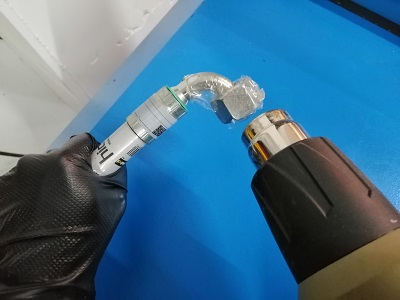
Hydraulic hose assemblies are essential components in hydraulic systems, providing a flexible and reliable connection for transferring pressurized hydraulic fluid between pumps, cylinders, control valves, and other hydraulic components.
A hydraulic hose assembly consists of a pressure-rated hydraulic hose combined with compatible fittings and permanently crimped connections. Proper hose selection, accurate assembly, and appropriate quality control are critical for maintaining system performance, minimizing fluid leakage, and supporting safe equipment operation.
Hidroman manufactures custom hydraulic hose assemblies for OEM manufacturers, industrial facilities, hydraulic service companies, and heavy equipment applications.
Our hydraulic hose solutions are designed around application-specific requirements, including operating pressure, hose diameter, fitting configuration, assembly length, fluid compatibility, and installation conditions.
Whether you require hydraulic hose assemblies for new equipment manufacturing, replacement parts, or industrial hydraulic systems, Hidroman provides application-oriented solutions tailored to your technical specifications.
Hidroman provides custom hydraulic hose manufacturing and assembly services for a wide range of industrial and mobile hydraulic applications.
Our production approach focuses on accurate dimensions, compatible hose and fitting combinations, controlled crimping processes, and application-appropriate quality inspection.
Key features of our hydraulic hose assembly manufacturing include:
Every hydraulic application has different operating conditions. Selecting the correct hose assembly requires more than matching the hose diameter or fitting size. Operating pressure, pressure surges, fluid compatibility, temperature, flow rate, and installation geometry must all be considered.
Hidroman supports customers in identifying suitable hydraulic hose assembly configurations for their equipment and production requirements.
Hydraulic hose assemblies are available in different configurations to accommodate equipment designs, operating conditions, and connection requirements.
|
Hydraulic hose assembly type |
Typical applications |
|
Straight hydraulic hose assemblies |
Standard hydraulic lines and general equipment connections |
|
45-degree and 90-degree elbow hose assemblies |
Tight installation spaces and directional changes |
|
Flange hydraulic hose assemblies |
Heavy-duty hydraulic systems and high-flow applications |
|
High-pressure hydraulic hose assemblies |
Hydraulic presses, heavy equipment, and high-pressure circuits |
|
Custom hydraulic hose assemblies |
OEM machinery, specialized equipment, and custom hydraulic systems |
Hidroman supports hydraulic hose assembly requirements involving different connection standards, including SAE, JIC, ORFS, BSP, and metric fittings, subject to application and product availability.
The correct fitting must be selected according to thread dimensions, sealing geometry, pressure rating, connection angle, and compatibility with the mating component.
Using fittings with incompatible thread standards or sealing surfaces can result in leakage, connection damage, and hydraulic system failures.
Selecting the correct hydraulic hose assembly is essential for hydraulic system efficiency, equipment reliability, and operational safety.
An incorrectly specified hose can contribute to excessive pressure loss, premature hose failure, fluid leakage, and unplanned equipment downtime.
The hydraulic hose must have a rated working pressure suitable for the system's maximum operating pressure and expected pressure surges.
Hose selection should be based on the manufacturer's specified working pressure, not simply the burst pressure.
The pressure ratings of the hose, fittings, and assembled connection must be compatible with the intended application.
For demanding applications, pressure spikes, cyclic loading, and operating conditions should also be considered during hose selection.
The inside diameter of a hydraulic hose must be selected according to the required hydraulic fluid flow rate.
An undersized hose can increase fluid velocity, pressure drop, and heat generation, potentially reducing system efficiency.
Correct hose sizing helps maintain suitable flow conditions and supports reliable operation of pumps, valves, hydraulic cylinders, and other system components.
The hose tube material must be compatible with the hydraulic fluid, additives, and operating temperature.
Applications involving high temperatures, cold environments, or specialized hydraulic fluids may require specific hose materials and construction.
The hose manufacturer's technical specifications should be reviewed to confirm suitability for the intended operating environment.
Hydraulic hose fittings must match the connection requirements of the equipment.
Important considerations include:
Correct fitting identification is particularly important in OEM manufacturing and replacement hose applications, where visually similar connections may use different sealing standards.
Hydraulic hose assembly length must account for the distance between connection points, equipment movement, and installation geometry.
The hose should be routed without twisting, excessive tension, or sharp bends.
Maintaining the manufacturer's specified minimum bend radius helps reduce unnecessary mechanical stress and supports longer service life.
For mobile equipment and moving hydraulic systems, hose routing must also accommodate the full range of equipment movement.
Quality control is an important part of hydraulic hose assembly manufacturing, particularly for applications involving high operating pressures and demanding industrial environments.
A properly assembled hydraulic hose requires compatible components, correct crimp dimensions, suitable assembly procedures, and appropriate inspection.
Hidroman's application-based quality control approach includes:
Pressure test values, test duration, and acceptance criteria are established according to the hose manufacturer's specifications, applicable standards, and customer requirements.
Not every hydraulic hose assembly should be tested at the same pressure. Test procedures must be appropriate for the specific hose construction, fitting combination, and intended application.
Reliable hydraulic hose assemblies depend on correct component selection, precision crimping, proper installation, and application-appropriate quality control.
Hydraulic hose assemblies are widely used in industries where pressurized fluid must be transferred reliably between hydraulic components.
Construction Equipment and Mobile Hydraulics
Hydraulic hose assemblies are used in excavators, wheel loaders, cranes, demolition equipment, and other mobile machinery.
Typical applications include hydraulic cylinder connections, pump and valve lines, auxiliary circuits, and attachment systems.
Custom hydraulic hose assemblies help equipment manufacturers and service companies meet specific installation and replacement requirements.
Mining and Heavy Industrial Equipment
Mining and heavy industrial machinery operate under demanding conditions that can include vibration, abrasive environments, high loads, and continuous operation.
Hydraulic hose assemblies are used in mining equipment, material handling machinery, underground equipment, and specialized industrial hydraulic systems.
Correct hose selection, suitable routing, and compatible fittings are important for maintaining hydraulic system reliability in these applications.
Agricultural and Forestry Equipment
Agricultural machinery relies on hydraulic hose assemblies for lifting, steering, implement control, and auxiliary hydraulic functions.
Applications include tractors, agricultural implements, harvesting equipment, and forestry machinery.
Hose assemblies must accommodate operating pressure, environmental exposure, and equipment movement.
Industrial Hydraulic Systems
Hydraulic hose assemblies are used in hydraulic presses, manufacturing equipment, industrial power units, automation systems, and production lines.
They provide flexible connections between hydraulic pumps, valves, cylinders, and other components where rigid piping is impractical or where equipment movement requires flexibility.
OEM manufacturers require hydraulic hose assemblies that meet equipment design specifications, production requirements, and repeatability expectations.
Custom hose assemblies can help simplify equipment integration, improve installation consistency, and support replacement-part management.
Hidroman provides application-oriented hydraulic hose solutions for original equipment manufacturers and industrial customers.
Our OEM-oriented services include:
By considering the complete hydraulic application, Hidroman supports equipment manufacturers in identifying hose assembly configurations that align with their design and operating requirements.
For hydraulic equipment manufacturers looking for a reliable manufacturing partner, application-specific hose assemblies can be integrated into broader hydraulic system and OEM component requirements.
The price of a hydraulic hose assembly depends on several technical and commercial factors, including:
Custom hydraulic hose assemblies may require additional technical evaluation to ensure that the selected components meet the application requirements.
To receive a quotation from Hidroman, please provide the following information:
Providing complete technical information helps facilitate accurate product identification, application evaluation, and quotation preparation.
Contact Hidroman for custom hydraulic hose assemblies, OEM hydraulic hose manufacturing, and application-specific hydraulic connection solutions.
What is a hydraulic hose assembly?
A hydraulic hose assembly is a flexible hydraulic connection consisting of a pressure-rated hose and compatible end fittings secured through an appropriate assembly and crimping process.
It is used to transfer pressurized hydraulic fluid between components such as pumps, valves, cylinders, and hydraulic power units.
Can hydraulic hose assemblies be manufactured to custom dimensions?
Yes. Hydraulic hose assemblies can be prepared according to technical drawings, sample hoses, equipment dimensions, and application requirements.
Custom configurations may include specific hose lengths, fitting standards, connection angles, and pressure ratings, subject to component availability and technical suitability.
How do I choose the correct hydraulic hose fitting?
The correct fitting depends on the mating port, thread standard, sealing surface, hose specifications, operating pressure, and installation geometry.
Common hydraulic connection types include JIC, ORFS, SAE flange, BSP, and metric fittings.
Thread dimensions and sealing characteristics should be verified before selecting or replacing a hydraulic hose assembly.
Why is pressure testing important for hydraulic hose assemblies?
Pressure testing, when performed using an appropriate procedure, helps verify that an assembled hose meets specified pressure and leakage acceptance criteria.
Test requirements depend on the hose construction, fitting combination, applicable standards, and customer specifications.
Pressure testing does not replace proper hose selection, installation, inspection, or scheduled maintenance.
What information is required to order a custom hydraulic hose assembly?
The essential information includes hose diameter, assembly length, fitting types, operating pressure, hydraulic fluid, and required quantity.
A technical drawing, equipment part number, or existing hose sample can help identify the correct replacement or custom assembly.
Does Hidroman manufacture hydraulic hose assemblies for OEM applications?
Hidroman provides custom hydraulic hose assembly solutions for OEM manufacturers, industrial facilities, and hydraulic service companies.
Technical drawings, sample components, and application requirements can be used to evaluate suitable hose and fitting configurations.
Hydraulic Hose Production Line and Images and Production Process Map;
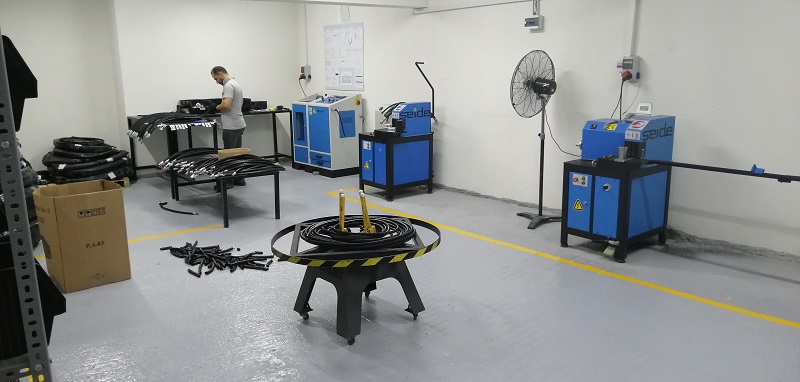
Hose cutting operation ;
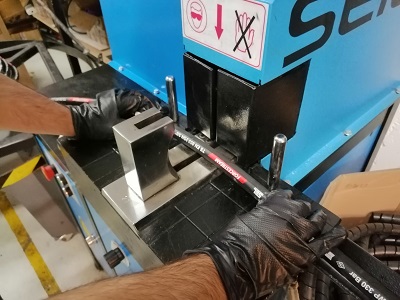
Hose peeling operation
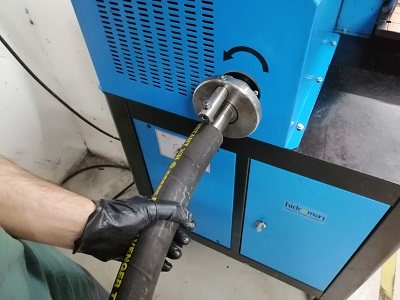
Hose fitting operation
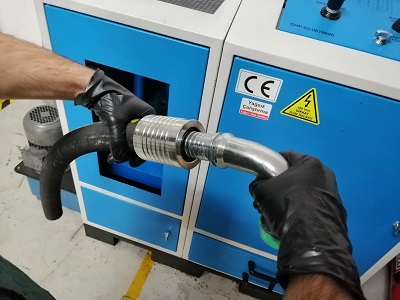
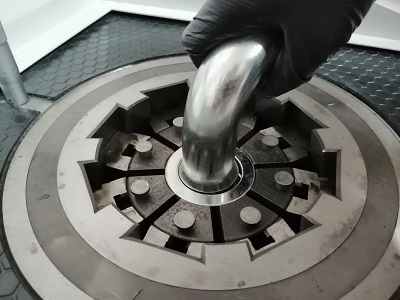
Hose Crimping Opretarion
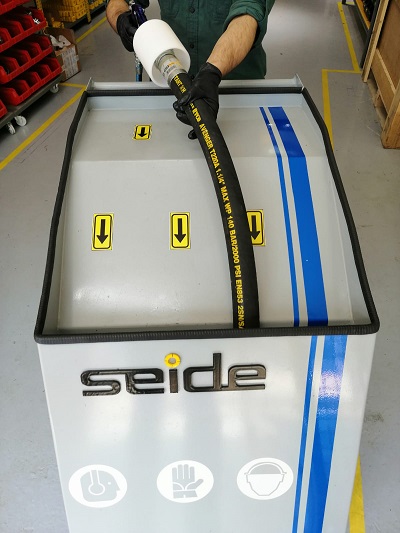
Hose Washing Operation
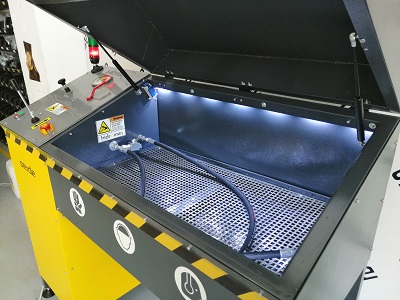
Hose Test Operation
Hose Marking Operation