Stainless Steel Flexible Hose | Industrial Metal Hose | Hidroman
What Is a Stainless Steel Flexible Hose? Industrial Applications, Specifications and Selection Guide
What Is a Stainless Steel Flexible Hose?
A stainless steel flexible hose is a flexible metal hose assembly designed to transfer liquids, gases, and compatible process fluids in industrial systems.
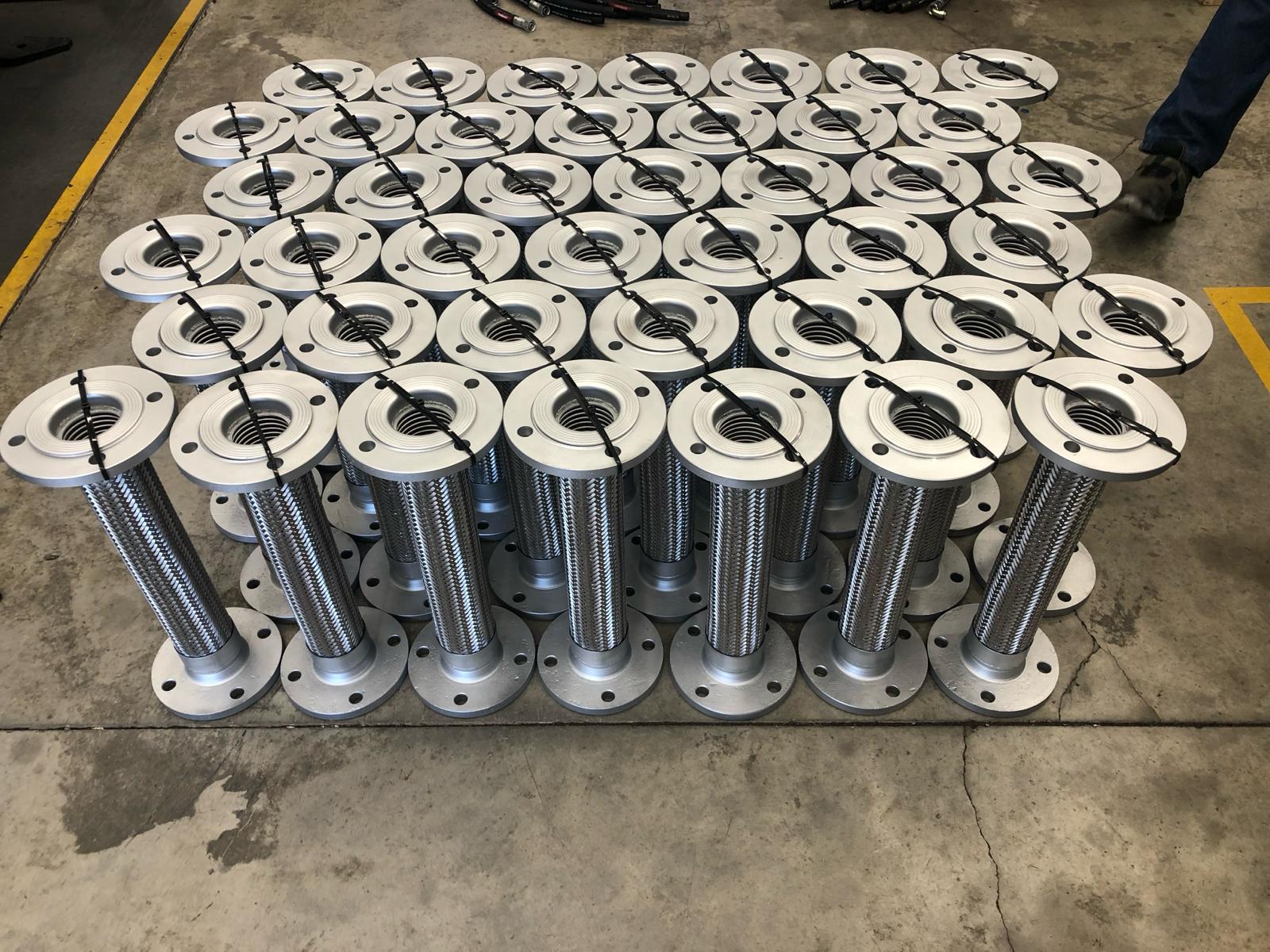
Its corrugated stainless steel construction provides flexibility for applications involving movement, vibration, and installation misalignment. Depending on the design, a stainless steel flexible hose may include a corrugated metal inner hose, an external stainless steel wire braid, and suitable end connections.
A typical stainless steel flexible hose assembly consists of:
Corrugated stainless steel inner hose: Forms the flexible fluid-carrying pressure boundary.
Stainless steel wire braid: Supports the hose and helps control axial expansion under pressure.
End fittings: Connect the hose to the piping system or equipment.
Optional protective layers: Depending on the application, external protection or insulation may be added.
Stainless steel flexible hoses are used when conventional rubber hoses or rigid piping connections are not suitable for the required temperature, movement, vibration, or environmental conditions.
How Is a Stainless Steel Flexible Hose Constructed?
The performance of a stainless steel flexible hose depends not only on the stainless steel grade but also on its geometry, construction, and manufacturing quality.
1. Corrugated Stainless Steel Inner Hose
The corrugated structure provides flexibility to the metal hose. It helps accommodate movement and certain levels of vibration in piping systems.
The inside diameter, corrugation geometry, wall thickness, and hose length all influence pressure performance, flow characteristics, and flexibility.
2. Stainless Steel Wire Braid
The stainless steel wire braid supports the corrugated hose and helps control axial elongation caused by internal pressure.
The number of braid layers, wire construction, and braid geometry affect the mechanical performance of the hose assembly.
The braid contributes to pressure resistance, but the hose's allowable working pressure cannot be determined by the braid alone.
3. End Connections
End fittings are selected according to system design, fluid compatibility, and operating conditions.
Common connection types include:
Flanged connections
Threaded connections
Swivel fittings
Welded connections
Special process connections
The material, pressure rating, temperature rating, and fluid compatibility of the end connections must be evaluated together with the hose construction.
Stainless Steel Grades Used in Flexible Metal Hoses
The stainless steel grade should be selected according to the corrosion environment and process requirements.
AISI 304 Stainless Steel
AISI 304 is a widely used stainless steel grade for general industrial applications. It offers good corrosion resistance and mechanical properties under suitable operating conditions.
AISI 316L Stainless Steel
AISI 316L contains molybdenum, which can provide improved corrosion resistance compared with AISI 304 in many chloride-containing environments.
It is commonly considered for chemical processing, petrochemical, marine, and selected industrial applications.
However, AISI 316L is not resistant to every chemical environment. Fluid composition, concentration, temperature, and operating conditions must be evaluated before material selection.
Advantages of Stainless Steel Flexible Hoses
Suitable for High- and Low-Temperature Applications
With appropriate material and design selection, stainless steel flexible hoses can be used in both high- and low-temperature processes.
Special configurations may be designed for steam, hot oil, hot gas, and cryogenic applications.
However, not all stainless steel flexible hoses have the same operating temperature range. The allowable temperature depends on the hose material, braid, end fittings, pressure, and operating cycle.
Pressure Resistance
The stainless steel braid supports the corrugated metal hose under internal pressure.
Properly engineered hose assemblies can be used in suitable industrial pressure applications. The allowable working pressure must be determined according to hose diameter, construction, braid design, temperature, and end connections.
Vibration and Movement Accommodation
Pumps, compressors, motors, and other rotating equipment can transmit vibration to connected piping systems.
A properly selected metal flexible hose can help reduce the transmission of vibration through the piping connection.
For dynamic applications, movement amplitude, frequency, hose length, and installation geometry must be considered.
Corrosion Resistance
When the correct stainless steel grade is selected, stainless steel flexible hoses can provide corrosion resistance in many humid and chemically demanding environments.
Flexible Installation
Flexible metal hoses provide connection flexibility in restricted spaces, equipment connections, and piping systems with minor alignment differences.
Industrial Applications of Stainless Steel Flexible Hoses
Chemical and Petrochemical Industry
Stainless steel flexible hoses can be used for fluid transfer in chemical processing systems when the selected material and fittings are compatible with the process medium.
Power Generation and Energy Plants
Suitable metal hose assemblies may be used in steam, hot oil, and gas systems, depending on the required pressure and temperature ratings.
Food and Pharmaceutical Industry
Stainless steel flexible hoses can be used in processes requiring hygienic design, provided that the material, surface finish, and connection configuration meet the relevant application requirements.
Heating, Cooling, and HVAC Systems
They can be used in boiler, pump, compressor, and HVAC equipment connections to accommodate vibration and installation movement.
Automotive and Marine Applications
Application-specific metal flexible hoses can be used in engine, exhaust, cooling, and auxiliary systems.
Cement, Steel, and Mining Industries
Metal flexible hoses with suitable construction can be considered for industrial facilities exposed to high temperatures, vibration, and demanding environmental conditions.
How to Select the Right Stainless Steel Flexible Hose
Selecting the correct stainless steel flexible hose requires more than checking the nominal diameter or stainless steel grade.
1. Operating Pressure
The hose's continuous working pressure must be suitable for the system's maximum operating pressure and pressure surges.
The following parameters should be considered:
Normal operating pressure
Maximum operating pressure
Pressure surges
Vacuum requirements
Test pressure
Test pressure and continuous working pressure are not the same.
2. Operating Temperature
Determine the normal and maximum fluid temperature. The allowable working pressure of a hose assembly may change at elevated temperatures.
Pressure-temperature limitations must be checked against the manufacturer's technical data.
3. Hose Diameter and Flow Rate
The hose inside diameter should be selected according to the required flow rate and acceptable fluid velocity.
Incorrect sizing can cause excessive pressure loss, flow restrictions, and reduced system performance.
4. Fluid Compatibility
The chemical composition, concentration, and temperature of the fluid influence material selection.
Stainless steel grades such as AISI 304 and AISI 316L should not automatically be considered suitable for every chemical.
5. Braid Construction
The braid configuration should be selected according to the pressure requirements of the application.
A hose may feature one or multiple braid layers. However, adding more braid layers alone does not guarantee suitability for every operating condition.
6. Bend Radius and Movement
The minimum bend radius specified by the manufacturer must be respected.
For dynamic applications, the hose movement and operating geometry should be evaluated separately.
7. End Connections
Flanges, threaded connections, swivel fittings, and special connectors should be selected according to operating pressure, temperature, fluid compatibility, and installation requirements.
Stainless Steel Flexible Hose Installation Guidelines
Correct installation is as important as proper hose selection.
Avoid twisting: The hose must not be rotated around its own axis during installation.
Respect the minimum bend radius: Do not exceed the manufacturer's specified limits.
Avoid excessive tension and compression: Do not apply axial loads beyond the hose assembly's design limits.
Use compatible fittings: Flanges, threaded connections, and fittings must be installed using suitable sealing methods.
Evaluate vibration conditions: Hose length, connection orientation, and movement should match the application.
Protect against external damage: Check for abrasion, impact, and contact with sharp or aggressive surfaces.
A stainless steel flexible hose should not be used to compensate for incorrect piping design or poor alignment.
DIN EN ISO 10380 for Stainless Steel Flexible Metal Hoses
DIN EN ISO 10380 is an important standard covering design and performance requirements for metallic hoses and hose assemblies.
When evaluating compliance, the hose construction, pressure performance, flexibility, and relevant testing requirements should be considered.
Compliance should not be assessed solely on the corrugated hose body. The complete hose assembly and its connection configuration are also important.
A statement that a product is manufactured in accordance with DIN EN ISO 10380 does not mean that every diameter and configuration has identical pressure and temperature ratings. The technical specifications and operating limits of the selected product must be checked.
Maintenance and Inspection of Stainless Steel Flexible Hoses
The service life of stainless steel flexible hose assemblies depends on correct selection, installation, operating conditions, and periodic inspection.
The following items should be checked:
Broken or deformed braid wires
Cracks, dents, or excessive deformation in the corrugated hose
Leakage around connection points
Corrosion or chemical damage
Excessive vibration and abrasion
Twisting or permanent deformation
Damaged metal hose assemblies should not be considered safe based only on their external appearance. Where necessary, they should be evaluated by the manufacturer or qualified technical personnel.
HIDROMAN Stainless Steel Flexible Hose Manufacturing
Hidroman provides stainless steel flexible hose solutions for industrial applications.
The manufacturing scope stated on the product page includes:
Diameter range from 1/4 inch to 10 inches
Manufacturing in accordance with DIN EN ISO 10380
100% leak testing
Project-specific connection options
Optional protective coatings, including fiberglass and silicone
The hose diameter, stainless steel grade, braid construction, end fittings, and operating conditions can be evaluated according to the project requirements.
Important: Working pressure, operating temperature, minimum bend radius, and other performance values must be verified against the technical configuration of the selected hose assembly.
Hidroman aims to provide stainless steel flexible hose solutions that support reliable fluid connections in demanding industrial environments.
Frequently Asked Questions
What is a stainless steel flexible hose?
A stainless steel flexible hose is a flexible metal hose assembly typically consisting of a corrugated stainless steel inner hose and an external stainless steel wire braid. It is used for fluid transfer and to accommodate movement and vibration in industrial systems.
What temperature range can stainless steel flexible hoses handle?
The operating temperature depends on the hose material, diameter, braid construction, end fittings, and operating pressure. There is no single temperature range that applies to every stainless steel flexible hose.
Can stainless steel flexible hoses handle high pressure?
Properly engineered and selected stainless steel flexible hose assemblies can be used in high-pressure applications. The allowable working pressure must be verified against the product's technical specifications.
What is the difference between AISI 304 and AISI 316L?
AISI 304 is widely used in general industrial applications. AISI 316L can offer improved corrosion resistance in many chloride-containing environments because of its molybdenum content. The correct grade depends on the fluid and operating environment.
Can stainless steel flexible hoses be used in steam lines?
Metal hose assemblies with suitable materials, pressure-temperature ratings, connections, and design can be used in steam applications. The selected product must be approved for the specific operating conditions.
Do stainless steel flexible hoses reduce vibration?
A correctly designed and installed metal flexible hose can help reduce the transmission of vibration from pumps, compressors, and motors into connected piping. Dynamic movement conditions must be evaluated.
Which standards apply to stainless steel flexible metal hoses?
DIN EN ISO 10380 is an important standard for metallic hoses and hose assemblies. Product compliance should be verified through the manufacturer's technical documentation and declarations.
Related Articles You May Also Be Interested In