How to Choose a Hydraulic Cylinder | Technical Selection Guide
How to Choose the Right Hydraulic Cylinder: Complete Technical Selection and Engineering Guide
Hydraulic cylinders are essential components in industrial hydraulic systems, converting hydraulic energy into controlled linear mechanical force and movement. Selecting the correct hydraulic cylinder directly affects machine performance, operational reliability, energy efficiency and service life.
Hydraulic cylinder selection involves much more than determining bore diameter and stroke length. Operating pressure, required force, piston rod diameter, operating speed, mounting configuration, load characteristics, working temperature and environmental conditions must all be considered.
Proper hydraulic cylinder design is particularly important in construction machinery, mining equipment, agricultural machinery, industrial presses, mobile hydraulic systems and custom machinery manufacturing.
This technical guide explains the main engineering considerations involved in hydraulic cylinder selection, including force calculations, bore sizing, flow requirements, material selection, mounting configurations and custom manufacturing requirements.
1. Operating Pressure and Hydraulic Cylinder Force Calculation
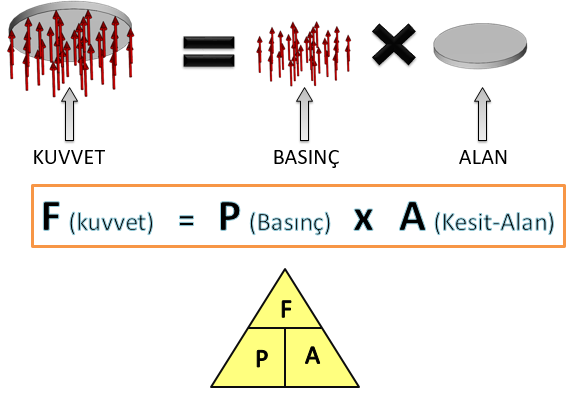
The force generated by a hydraulic cylinder depends on the hydraulic pressure applied to the piston and its effective surface area.
The basic formula is:
F = P × A
Where:
F: Force (Newtons)
P: Pressure (N/mm²)
A: Effective piston area (mm²)
When pressure is expressed in bar, it must be converted correctly. One bar equals 0.1 N/mm².
Hydraulic cylinder extension force
F = P × (π × D² / 4)
Hydraulic cylinder retraction force
F = P × [π × (D² - d²) / 4]
Where:
D: Cylinder bore diameter
d: Piston rod diameter
P: Effective pressure at the cylinder port
In double-acting hydraulic cylinders, extension and retraction forces are different.
During retraction, the piston rod occupies part of the piston surface area. This reduces the effective hydraulic area and results in lower retraction force at the same pressure.
Hydraulic cylinder force calculation example
Consider a hydraulic cylinder with a 100 mm bore, a 50 mm piston rod and an operating pressure of 200 bar.
Technical specification | Value |
|---|---|
Bore diameter | 100 mm |
Piston rod diameter | 50 mm |
Operating pressure | 200 bar |
Theoretical extension force | 157,080 N |
Theoretical retraction force | 117,810 N |
In this example, the cylinder produces approximately 157 kN of theoretical extension force and 118 kN of theoretical retraction force.
These values are theoretical. Actual operating force depends on friction, pressure losses, mechanical efficiency, load characteristics and operating conditions.
Proper cylinder selection must consider both maximum force requirements and the actual continuous and dynamic loads of the machine.
2. How to Calculate Hydraulic Cylinder Bore Size
The cylinder bore diameter is one of the most important dimensions determining the force output of a hydraulic cylinder.
At the same operating pressure, a larger bore produces greater force. However, selecting an unnecessarily large bore increases oil volume and flow requirements, potentially requiring a larger hydraulic pump and power unit.
When the required force and operating pressure are known, the theoretical bore diameter can be calculated using:
D = √(4 × F / π × P)
Where:
D: Bore diameter
F: Required force
P: Operating pressure
Pressure and force units must be consistent when applying the formula.
The calculated bore diameter should not automatically be treated as the final manufacturing dimension. Standard bore sizes, cylinder barrel wall thickness, mechanical strength, seal dimensions and manufacturing tolerances must also be evaluated.
3. How to Select Hydraulic Cylinder Stroke Length
Stroke length is the total linear distance traveled by the piston rod between its fully retracted and fully extended positions.
The correct stroke length must match the machine's required movement and mechanical mounting geometry.
Incorrect stroke selection can result in:
Insufficient machine travel.
Mechanical interference.
Inadequate installation space.
Unnecessarily large cylinder dimensions.
Excessive mechanical stress on mounting points.
For long-stroke hydraulic cylinders, piston rod buckling, guidance and mounting geometry require particular attention.
4. Hydraulic Cylinder Piston Rod Diameter and Buckling Resistance
Piston rod diameter directly affects the mechanical strength and operational reliability of a hydraulic cylinder.
Rod sizing must consider not only tensile and compressive loads but also buckling resistance.
Buckling is a particularly important design consideration in long-stroke hydraulic cylinders operating under compressive loads.
The following factors should be evaluated:
Maximum compressive force.
Unsupported piston rod length.
Cylinder stroke.
Mounting and bearing configuration.
Axial and lateral loading conditions.
Dynamic operating forces.
Mechanical properties of the piston rod material.
An incorrectly sized piston rod may bend or buckle, potentially damaging the rod bearings and sealing components.
For heavy-duty hydraulic cylinders, piston rod buckling calculations are an essential part of the engineering design process.
5. Hydraulic Cylinder Speed and Pump Flow Calculation
Hydraulic cylinder speed depends on the effective piston area and the hydraulic fluid flow supplied to the cylinder.
The basic formula is:
v = Q / A
Where:
v: Cylinder speed
Q: Hydraulic flow rate
A: Effective piston area
Flow rate and area must be expressed in compatible units. For example, when flow is expressed in L/min and area in mm², the result must be converted to mm/s.
Since extension and retraction use different effective piston areas, their movement speeds may also differ at the same flow rate.
The following parameters should be considered when calculating cylinder speed:
Extension speed.
Retraction speed.
Hydraulic pump flow rate.
Pressure losses across valves and fittings.
Other hydraulic consumers operating simultaneously.
Required machine cycle time.
Incorrect flow calculations can prevent a machine from achieving its required operating speed or result in unnecessary energy consumption.
6. Selecting the Correct Hydraulic Cylinder Type
Different hydraulic cylinder configurations are used depending on the machine design and application requirements.
Single-Acting Hydraulic Cylinder
A single-acting hydraulic cylinder uses hydraulic pressure to generate movement in one direction.
The return movement is achieved through a spring, gravity or an external mechanical force, depending on the application.
These cylinders are suitable for lifting and pressing applications requiring force in one direction.
Double-Acting Hydraulic Cylinder
A double-acting hydraulic cylinder uses hydraulic pressure to control both extension and retraction.
These cylinders are widely used in construction machinery, agricultural equipment, industrial presses and mobile hydraulic systems requiring controlled movement in both directions.
Telescopic Hydraulic Cylinder
Telescopic hydraulic cylinders consist of multiple stages that extend from one another.
They are designed for applications requiring long stroke lengths within limited retracted installation dimensions.
Common applications include dump trucks, lifting systems and mobile hydraulic equipment.
Tandem Hydraulic Cylinder
Tandem hydraulic cylinders use multiple piston areas arranged along a common axis.
Depending on the design, they can generate greater combined force under the same operating pressure.
Custom Hydraulic Cylinder
Custom hydraulic cylinders are developed for applications where standard dimensions, mounting configurations or operating specifications cannot meet the machine's requirements.
OEM machinery manufacturers and specialized industrial projects may require custom bore sizes, stroke lengths, rod dimensions, mounting configurations and pressure ratings.
7. Material and Seal Selection According to Operating Conditions
The service life of a hydraulic cylinder depends on selecting materials and sealing components suitable for its operating environment.
Material selection is particularly important in mining, marine, heavy industrial, mobile machinery and outdoor applications.
Cylinder barrel: Internal surface finish, honing quality, dimensional tolerances and pressure resistance must be evaluated.
Piston rod: Material quality, surface hardness, chrome plating quality and corrosion resistance are important considerations.
Piston: Mechanical strength, bearing arrangement and sealing design must match the application.
Seals: Operating pressure, temperature, hydraulic fluid type and chemical compatibility must be considered.
Body and mounting components: Mechanical loads, weld quality and environmental conditions must be evaluated.
Incorrect seal selection can cause hydraulic leakage, excessive friction and premature wear.
Sealing materials should therefore be selected according to operating pressure, temperature and hydraulic fluid compatibility.
8. Hydraulic Cylinder Mounting Types and Mechanical Alignment
The mounting configuration of a hydraulic cylinder directly affects the mechanical loads experienced during operation.
Common mounting configurations include:
Clevis mounting.
Flange mounting.
Foot mounting.
Tie-rod mounting.
Trunnion mounting.
Spherical bearing connections.
Custom mounting arrangements.
A hydraulic cylinder should ideally transmit axial forces without unwanted side loading.
Incorrect mounting geometry can introduce lateral forces into the piston rod and bearings. This may result in rod bending, bearing damage and premature seal wear.
Cylinder mounting must therefore be evaluated together with the machine's movement geometry and operating conditions.
9. Hydraulic Cylinder Operating Pressure and Safety Considerations
Hydraulic cylinder pressure ratings must be determined according to the actual operating conditions of the hydraulic system.
The following factors should be considered:
Nominal operating pressure.
Maximum operating pressure.
Pressure spikes.
Sudden load changes.
Shock and impact loads.
Pressure cycling and fatigue.
Proof pressure and applicable testing standards.
The pressure resistance of a hydraulic cylinder is not determined by barrel wall thickness alone.
End connections, welds, piston, piston rod, mounting points and sealing components must all be evaluated as part of the complete cylinder assembly.
For high-pressure and heavy-duty applications, engineering verification and appropriate testing procedures are essential.
10. Why Custom Hydraulic Cylinder Manufacturing Matters
Standard hydraulic cylinders are suitable for many industrial applications. However, OEM machinery manufacturers and specialized equipment designers often require configurations that are not available as standard products.
Custom hydraulic cylinder manufacturing allows engineers to develop solutions according to specific application requirements.
Custom design options may include:
Special bore diameters.
Different piston rod diameters.
Non-standard stroke lengths.
Different operating pressure requirements.
Custom mounting configurations.
Heavy-duty cylinder body designs.
Application-specific sealing systems.
Compact designs for restricted installation spaces.
Special hydraulic port configurations.
Hidroman provides hydraulic cylinder engineering and custom manufacturing solutions for OEM projects and industrial applications.
During the design process, force requirements, operating pressure, stroke length, mounting geometry and environmental conditions are evaluated together.
11. Common Hydraulic Cylinder Selection Mistakes
Focusing only on purchase price or cylinder bore diameter can lead to increased maintenance and operating costs over the long term.
Common selection mistakes include:
Selecting the bore diameter without calculating the required force.
Ignoring the difference between extension and retraction force.
Failing to perform piston rod buckling calculations.
Selecting an incorrect stroke length.
Overlooking side loads and mounting misalignment.
Using seals that are incompatible with operating temperatures.
Considering only nominal pump pressure instead of actual cylinder operating pressure.
Failing to evaluate pump flow and cylinder speed together.
Ignoring duty cycle and fatigue requirements.
Selecting materials and surface treatments that are unsuitable for the working environment.
A proper engineering approach helps improve machine performance while reducing unexpected failures and maintenance costs.
12. What Information Is Required to Specify a Hydraulic Cylinder?
Providing only a photograph of an existing hydraulic cylinder is not always sufficient for an accurate technical evaluation.
For proper hydraulic cylinder sizing and design, the following information should be prepared:
Technical information | Description |
|---|---|
Application | Machine and operating requirements |
Required force | Extension and retraction force |
Operating pressure | Nominal and maximum pressure |
Bore diameter | Existing or required bore |
Rod diameter | Existing or required rod |
Stroke length | Required travel distance |
Operating speed | Extension and retraction time |
Mounting type | Front and rear mounting configuration |
Working environment | Temperature, moisture, dust and corrosion |
Duty cycle | Operating hours and cycle frequency |
Hydraulic fluid | Fluid type |
Technical drawing | Existing cylinder or machine drawing |
These details help engineers evaluate cylinder dimensions, mechanical design, material selection and manufacturing requirements more accurately.
Frequently Asked Questions About Hydraulic Cylinder Selection
How do you calculate hydraulic cylinder bore size?
Hydraulic cylinder bore size is calculated using the required force and operating pressure. The required piston area is determined first, followed by the theoretical bore diameter. Standard dimensions and mechanical strength requirements must then be evaluated.
How do you calculate hydraulic cylinder force?
Extension force is calculated by multiplying hydraulic pressure by the full piston area. Retraction force is calculated using the annular area after subtracting the piston rod area.
How do you select hydraulic cylinder rod diameter?
Piston rod diameter depends on maximum compressive force, stroke length, unsupported rod length, mounting configuration and buckling resistance.
How is hydraulic cylinder stroke length determined?
Stroke length is determined by the required machine travel and mounting geometry. Fully retracted and fully extended installation dimensions must also be checked.
What is the difference between single-acting and double-acting hydraulic cylinders?
Single-acting cylinders use hydraulic pressure to generate force in one direction. Retraction is achieved through an external force, spring or gravity. Double-acting cylinders use hydraulic pressure to control both extension and retraction.
What should be considered when selecting a long-stroke hydraulic cylinder?
Piston rod buckling, unsupported rod length, bearing support, mounting geometry and potential lateral loads must be carefully evaluated.
Does pump flow rate affect hydraulic cylinder selection?
Yes. Pump flow determines cylinder movement speed, while operating pressure and effective piston area determine theoretical force. Both must be considered to achieve the required machine performance.
Can custom hydraulic cylinders be manufactured?
Yes. Custom hydraulic cylinders can be designed according to required bore diameter, stroke length, rod diameter, operating pressure and mounting configuration.
Why is hydraulic cylinder selection an engineering process?
A hydraulic cylinder must do more than generate force. Mechanical strength, pressure, speed, mounting, sealing and service life must all be considered. Incorrect selection can negatively affect machine performance and operational reliability.
Hidroman – Hydraulic Cylinder and OEM Engineering Solutions
Properly designed hydraulic cylinders are essential for machine performance and operational reliability.
Hidroman provides custom hydraulic cylinder design and manufacturing solutions for OEM machinery manufacturers, construction equipment manufacturers and industrial facilities.
Depending on project requirements, bore diameter, stroke length, rod diameter, mounting configuration, operating pressure and material specifications can be evaluated to develop suitable hydraulic cylinder solutions.
Contact Hidroman to discuss your hydraulic cylinder project, technical requirements and custom manufacturing needs.
Hidroman – Engineering reliable hydraulic solutions.
Related Articles You May Also Be Interested In
- What Is a Hydraulic Cylinder? Types and Working Principles