


Hydraulic systems operate under extremely high pressure and depend on clean hydraulic fluid to deliver reliable performance. While many maintenance teams focus on pumps, valves, filters, and cylinders, one critical contamination source is often overlooked—the inside of hydraulic hoses and tubes.
Particles left inside newly manufactured or repaired hoses can circulate through the hydraulic circuit, damaging pumps, servo valves, proportional valves, seals, and cylinders. Even microscopic contamination may significantly reduce system efficiency and component life.
For this reason, professional hydraulic hose internal cleaning has become an essential process in industries where hydraulic reliability is critical.
During manufacturing, cutting, crimping, welding, bending, or storage, contaminants may remain inside hydraulic hoses and tubes.
Typical contaminants include:
Without proper cleaning, these contaminants enter the hydraulic oil during startup and circulate throughout the system.
The result can include:
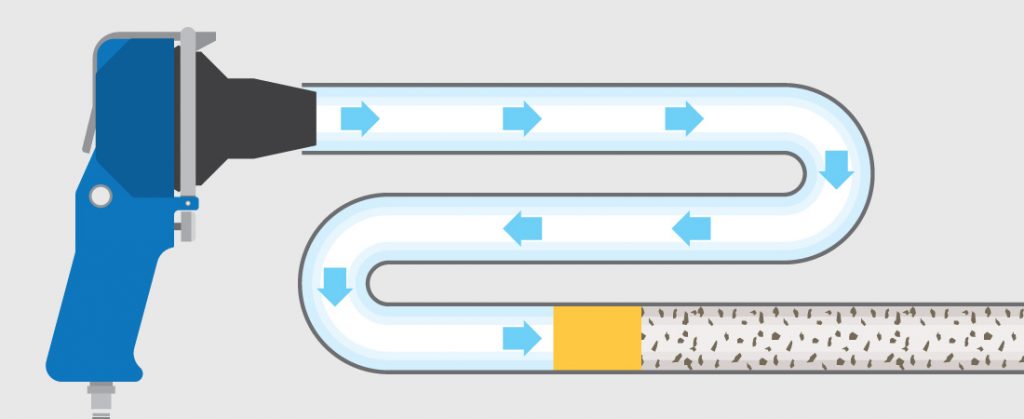
JETCLEANER uses a simple but highly effective cleaning principle.
A specially designed polyurethane projectile is propelled through the hose using compressed air at approximately 8 bar (115 psi). As the projectile travels through the hose, it wipes or scrapes contamination from the internal surface depending on projectile type.
Unlike traditional flushing methods, the projectile physically removes particles instead of simply moving them further along the line.
Depending on compressor capacity, the system can clean hoses and tubes with lengths of several hundred feet.
Modern hydraulic systems demand extremely clean components.
According to the product documentation, the cleaning system is capable of achieving cleanliness levels in accordance with:
Depending on projectile selection and cleaning procedure, cleanliness can reach ISO 15/13/10, making the process suitable for demanding hydraulic applications.
No single cleaning projectile is suitable for every application. JETCLEANER offers multiple projectile types for different contamination levels and hose geometries.
Designed from medium-hard flexible polyurethane.
Suitable for:
Recommended projectile size is approximately 20% larger than the hose internal diameter for effective cleaning.
Manufactured from soft polyurethane for maximum flexibility.
Advantages include:
These projectiles are particularly suitable where high cleanliness levels are required.
Designed for:
Their higher-density polyurethane construction allows improved cleaning performance in straight tube applications.
For heavy contamination including:
The abrasive surface removes difficult deposits inside metal tubes.
Recommended projectile size is approximately 5% larger than the tube internal diameter.
Designed for severe contamination removal such as:
Grinding projectiles are intended primarily for straight pipes with smooth bends.
The product family includes several equipment options depending on production volume.
Ideal for:
Supports hose sizes from 3/16" to 1".
The original cleaning gun manufactured from cast aluminum.
Suitable for:
Supports hose sizes from 3/16" to 2" and tube diameters up to 60 mm.
A semi-automatic lightweight cleaning gun designed for high productivity.
Features include:
Suitable for repetitive cleaning operations.
For high-volume manufacturing, PLC-controlled cleaning stations provide automated cleaning and process verification.
Available systems include:
These stations can be equipped with:
Such automation helps maintain consistent cleanliness across production batches.
The cleaning technology is widely used across industries including:
Its versatility allows it to clean both hydraulic hoses and industrial tubing in a broad range of applications.
For maximum cleaning efficiency:
Internal hose contamination remains one of the leading causes of premature hydraulic component failure. Professional projectile-based cleaning offers a fast, reliable, and repeatable method for removing contamination before hoses enter service.
By selecting the appropriate projectile and cleaning equipment, manufacturers and maintenance teams can significantly improve hydraulic system cleanliness, reduce wear, extend component life, and support compliance with internationally recognized ISO cleanliness standards.