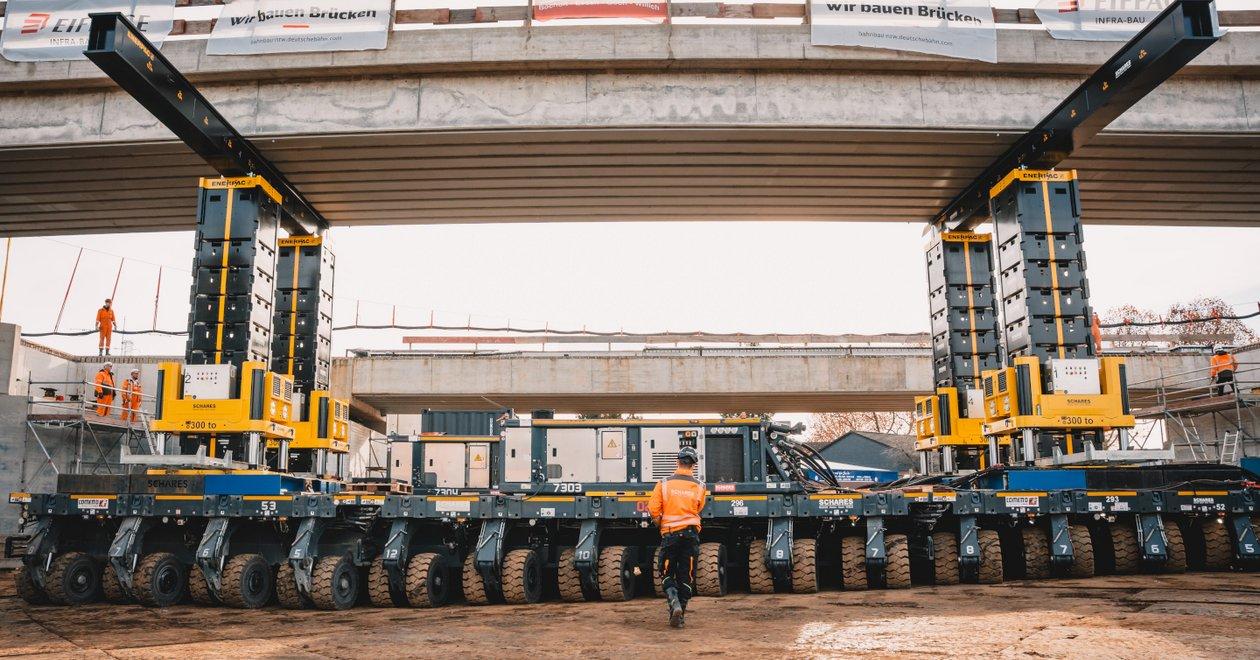
900-Ton Synchronized Hydraulic Lifting System | Enerpac
900-Ton Synchronized Hydraulic Lifting System: Precision Heavy Lifting with Enerpac Hydraulic Technology
Heavy industrial lifting operations require more than high-capacity hydraulic cylinders. When lifting bridges, industrial machinery, steel structures, or large equipment, maintaining precise movement across multiple lifting points is essential.
A synchronized hydraulic lifting system provides controlled lifting through multiple hydraulic cylinders operating together. By monitoring cylinder stroke and coordinating lifting movements, the system helps maintain a balanced lifting process.
The 900-ton Enerpac synchronized lifting system featured in this application consists of an Enerpac EVO821380 control unit and six HCL1506 hydraulic lock nut cylinders, each rated at 150 tons.
Designed for demanding heavy-lifting applications, this configuration combines high hydraulic capacity with synchronized movement control.
What Is a 900-Ton Synchronized Hydraulic Lifting System?
A synchronized hydraulic lifting system is an engineered solution that uses multiple hydraulic cylinders to raise a structure or load in a coordinated manner.
Unlike conventional lifting arrangements, where separate lifting points may move independently, synchronized systems monitor and control cylinder movement to help maintain consistent lifting levels.
This is particularly important when handling large structures where uneven lifting can create excessive mechanical stress, structural deformation, or operational hazards.
900-Ton Enerpac System: Technical Specifications
| Component | Specification |
|---|---|
| Synchronization control unit | 1 × Enerpac EVO821380 |
| Hydraulic cylinders | 6 × Enerpac HCL1506 |
| Individual cylinder capacity | 150 tons |
| Total nominal lifting capacity | 900 tons |
| Operating pressure | 700 bar |
| Lifting point control | 8 points |
| Synchronization accuracy | ±1 mm |
Note: The specifications are based on the supplied system presentation. The actual cylinder connections, number of available lifting points, and allowable load must be verified against the approved project configuration.
How Does the Enerpac EVO Synchronized Lifting System Work?
The Enerpac EVO821380 control unit coordinates hydraulic cylinder movements during lifting operations.
Stroke sensors monitor the movement of individual cylinders. The control system uses position feedback to track lifting distances and coordinate the movement of connected lifting points.
This approach supports:
Coordinated hydraulic cylinder movement.
Accurate lifting position monitoring.
Controlled lifting across multiple points.
Reduced differences in lifting height.
Improved operational control during heavy lifting.
The advertised synchronization accuracy for this system is ±1 mm. Actual performance depends on system configuration, load distribution, installation conditions, and operating procedures.
Enerpac HCL1506: 150-Ton Hydraulic Lock Nut Cylinders
The lifting configuration includes six Enerpac HCL1506 hydraulic cylinders, each with a nominal capacity of 150 tons.
Why Use Hydraulic Lock Nut Cylinders?
Lock nut cylinders provide a mechanical locking feature that allows the load to be mechanically supported after reaching the required lifting position, following the appropriate operating procedure.
This is particularly valuable in applications where a load must remain supported during inspection, maintenance, installation, or component replacement.
Typical applications include:
Heavy industrial equipment installation.
Bridge bearing replacement.
Large machinery maintenance.
Structural lifting operations.
Heavy-duty industrial positioning.
Mechanical locking does not eliminate the need for approved load-support arrangements, structural verification, and site-specific safety procedures.
Applications of 900-Ton Synchronized Hydraulic Lifting Systems
1. Bridge Bearing Replacement
Bridge maintenance projects often require controlled lifting to access and replace bearings or other structural components.
Synchronized hydraulic lifting allows multiple lifting points to operate together, helping maintain the required lifting geometry.
2. Heavy Industrial Equipment Installation
Large industrial machinery in steel mills, power plants, mining facilities, and manufacturing plants may require high-capacity lifting systems during installation and maintenance.
Multi-point hydraulic lifting provides a controlled method for positioning heavy equipment.
3. Steel Structures and Stadium Construction
Large steel structures and stadium roof assemblies may require coordinated lifting at several locations.
Synchronized lifting systems help engineers manage lifting movements while maintaining the planned structural configuration.
4. Shipbuilding and Offshore Operations
Shipyards and offshore projects frequently involve large components that require controlled lifting and positioning.
High-capacity hydraulic lifting equipment can support these operations when appropriately engineered for the load and environment.
5. Heavy Machinery Maintenance
During major equipment overhauls, hydraulic lifting systems can help raise machinery and structural assemblies to provide access for maintenance or component replacement.
Key Advantages of Synchronized Hydraulic Lifting
The main characteristics of the featured 900-ton system include:
High lifting capacity: Six 150-ton cylinders provide a combined nominal cylinder capacity of 900 tons.
Precision movement control: Advertised synchronization accuracy of ±1 mm.
Multi-point operation: Control architecture specified for eight lifting points.
High-pressure hydraulic operation: 700-bar operating pressure.
Mechanical load support: Lock nut functionality on the HCL1506 cylinders.
Industrial applications: Suitable for evaluation in demanding infrastructure, construction, marine, and heavy industrial projects.
How to Select the Right Synchronized Hydraulic Lifting System
Selecting a heavy-duty hydraulic lifting system requires detailed engineering calculations.
The following parameters should be evaluated before choosing the equipment:
Total load weight: Determine the actual weight of the structure or machinery.
Center of gravity: Analyze the load distribution and potential eccentric loading.
Number of lifting points: Determine the required cylinder arrangement.
Cylinder capacity: Calculate the load carried by each individual cylinder.
Cylinder stroke: Establish the required lifting height.
Synchronization requirements: Define acceptable differences in lifting position.
Foundation conditions: Verify the load-bearing capacity of the supporting surfaces.
Safety requirements: Establish mechanical support, load securing, and emergency procedures.
The total nominal capacity of the cylinders should not automatically be treated as the allowable project lifting capacity. The approved lifting plan must account for load distribution, cylinder positioning, structural limitations, and operating conditions.
Renting a 900-Ton Enerpac Synchronized Lifting System
For companies that require high-capacity lifting equipment only for specific projects, renting can be an alternative to purchasing expensive specialized equipment.
Project-based equipment rental can provide several advantages:
Access to high-capacity hydraulic lifting equipment without a major capital investment.
Equipment availability for specific construction and maintenance projects.
Reduced long-term equipment storage requirements.
Greater flexibility when planning specialized lifting operations.
The supplied system presentation advertises the 900-ton Enerpac synchronized lifting system as a rental solution. Rental availability, technical configuration, and commercial conditions should be confirmed directly with the relevant supplier.
Frequently Asked Questions
What is a synchronized hydraulic lifting system?
It is a hydraulic lifting solution that coordinates multiple cylinders to raise a heavy load through several controlled lifting points.
How much weight can the 900-ton Enerpac system lift?
The featured configuration has six 150-ton hydraulic cylinders, giving a combined nominal cylinder capacity of 900 tons. Actual allowable lifting capacity must be established through project engineering.
What is the operating pressure of the system?
The advertised operating pressure is 700 bar.
What is the synchronization accuracy?
The product presentation specifies a synchronization accuracy of ±1 mm.
What is an Enerpac lock nut cylinder?
A lock nut cylinder is a hydraulic cylinder with a mechanical locking feature that can support a load at a selected position when operated according to the manufacturer's procedures.
Where are synchronized hydraulic lifting systems used?
Typical applications include bridge bearing replacement, heavy machinery installation, steel structure construction, shipbuilding, offshore operations, and industrial maintenance.
Can a 900-ton hydraulic lifting system be rented?
The featured Enerpac system is advertised as a rental solution. Availability and project-specific conditions should be confirmed directly with the supplier.
Conclusion: Precision Engineering for Heavy-Duty Hydraulic Lifting
Heavy lifting operations require the right combination of hydraulic capacity, synchronized movement control, structural engineering, and safety procedures.
The 900-ton Enerpac synchronized hydraulic lifting configuration demonstrates how high-capacity hydraulic cylinders and centralized control technology can support demanding lifting operations.
For industrial companies, OEM manufacturers, and engineering contractors, understanding the relationship between hydraulic capacity, load distribution, and synchronized movement is essential when planning complex lifting projects.
Hidroman provides hydraulic engineering, custom hydraulic power units, industrial hydraulic systems, and application-specific engineering solutions for demanding industrial environments.