Stainless Steel Flexible Hose | Industrial Metal Hose – Hidroman
Stainless Steel Flexible Hose | Manufacturing, Specifications and Industrial Applications
Stainless Steel Flexible Metal Hoses for Industrial Applications
Stainless steel flexible hoses are metal hose assemblies designed to transfer liquids, gases, steam, and other compatible media in industrial and commercial systems. Their flexibility, corrosion resistance, and ability to accommodate movement and vibration make them useful in a wide range of piping applications.
Stainless steel flexible hoses are commonly used in water lines, hot oil systems, steam lines, air and gas systems, fan coil connections, solar energy installations, and industrial process piping.
Hidroman manufactures stainless steel flexible hoses at its production facility in İzmir, Türkiye, with available diameters ranging from 1/4 inch to 10 inches. Depending on application requirements, hose assemblies can be configured with stainless steel wire braid and optional external protective coverings.
1. What Is a Stainless Steel Flexible Hose?
A stainless steel flexible hose is a flexible metal hose manufactured from stainless steel. It is designed to provide a flexible connection between piping components and equipment while accommodating installation variations, vibration, thermal movement, and limited mechanical movement.
Unlike rigid metal piping, flexible metal hoses can be routed through restricted spaces and can help reduce the transmission of vibration and movement-related stress to connected equipment when properly selected and installed.
Depending on the design, stainless steel flexible hoses can include a corrugated metal hose body, stainless steel wire braid, and optional external protective coverings.
Construction and Materials
The basic construction consists of a flexible stainless steel metal hose body. Additional reinforcement and protective layers may be selected according to the intended application.
Inner hose body:
Stainless steel flexible metal construction
Stainless steel grade and wall thickness selected for the application
Internal surface suitable for the conveyed media
External reinforcement and protection:
Stainless steel wire braid
Protective external coverings
Optional fiberglass or silicone-based protective coverings
Stainless steel wire braid supports the hose body, helps control pressure-related expansion, and improves mechanical resistance. However, the working pressure is not determined by the braid alone. Hose diameter, wall thickness, braid construction, end connections, operating temperature, and service conditions must all be considered.
Main Advantages of Stainless Steel Flexible Hoses
Corrosion resistance: Stainless steel can provide good corrosion resistance in humid and many industrial environments when the correct material grade is selected.
High-temperature capability: Metal hose construction can be suitable for high-temperature applications when the hose, braid, and end connections are properly specified.
Flexibility: Flexible metal hoses simplify routing and installation in confined spaces and around piping direction changes.
Vibration and movement accommodation: Properly selected flexible hose assemblies can help reduce the transmission of vibration and movement-related stress.
Multiple connection options: Threaded, flanged, nipple, and application-specific connection configurations can be considered.
2. Industrial Applications of Stainless Steel Flexible Hoses
Stainless steel flexible hoses are used in applications where flexibility, temperature resistance, corrosion resistance, and reliable connections are required.
Industrial Applications
Chemical processing: Suitable stainless steel grades and connection materials can be selected for compatible chemical media.
Oil and gas: Used in process piping, equipment connections, and appropriately designed gas transfer applications.
Power generation: Used in heat transfer systems, boiler connections, and auxiliary piping.
Industrial facilities: Used for water, air, hot oil, and other compatible process media.
Automotive and Marine Applications
Automotive: Used in selected engine cooling and exhaust connection applications.
Marine: Used in seawater, exhaust, and auxiliary piping systems when the material and assembly are suitable for the operating environment.
Food and Pharmaceutical Industries
Stainless steel flexible hoses may be considered for food processing and pharmaceutical facilities when the material grade, internal surface, connection design, and cleaning requirements meet the application's specifications.
Stainless steel construction alone does not automatically establish sanitary suitability. Product selection must account for media compatibility, cleanability, surface requirements, and applicable facility standards.
Other Applications
Water supply lines
Hot oil systems
Steam lines
Fan coil connections
Solar energy systems
Boilers and heating systems
Air and gas lines
Equipment connections
Commercial and decorative piping installations
3. Stainless Steel Flexible Hose Design and Specifications
Stainless steel flexible hose design requires consideration of flexibility, mechanical strength, operating pressure, temperature, and installation conditions.
Hose Diameter and Length
Hose diameter should be selected according to the required flow rate and connection dimensions. Incorrect sizing may cause unnecessary pressure loss or negatively affect system performance.
Hose length must account for installation distance, movement, vibration, and the required bend radius.
Hidroman's stainless steel flexible hose production range covers diameters from 1/4 inch to 10 inches. The final configuration is determined according to project requirements.
Connection Types
Depending on the application, stainless steel flexible hose assemblies can be supplied with different connection configurations, including:
Threaded connections
Flanged connections
Nipple connections
Union and fitting connections
Custom connection configurations
Connection selection must consider the conveyed media, operating pressure, temperature, and mechanical requirements of the piping system.
Temperature and Pressure Resistance
Stainless steel flexible hoses can be designed for a wide range of operating temperatures. The source product information lists different temperature ranges for different configurations, including -270°C to +600°C and -200°C to +550°C in the DIN EN ISO 10380 section.
These figures should not be treated as one universal operating range for every stainless steel flexible hose. The actual temperature limits depend on the hose construction, stainless steel grade, braid, end connections, and operating conditions. Connection components may have different temperature limits from the hose itself.
Working pressure also depends on hose diameter, wall thickness, braid construction, connection design, and operating temperature. The pressure and temperature limits specified in the product documentation must not be exceeded.
4. Hidroman Stainless Steel Flexible Hose Manufacturing
Hidroman manufactures stainless steel flexible hoses at its production facility in İzmir, Türkiye, using stainless steel strip material.
The manufacturing process involves forming the metal material, producing the flexible hose body, performing the required welding operations, and carrying out leakage inspections.
Hidroman's stainless steel flexible hose manufacturing range covers diameters from 1/4 inch to 10 inches. Different wire braid and external protection configurations can be considered according to the application.
Stainless Steel Wire Braid
The stainless steel wire braid surrounding a flexible metal hose provides reinforcement and supports the hose body.
The braid helps control pressure-related expansion and improves mechanical resistance. Wire diameter, braid angle, number of layers, and braid density are important factors affecting hose performance.
Hidroman can evaluate different metal braid configurations according to the required mechanical and pressure conditions.
Optional External Protective Coverings
Depending on the operating environment and temperature requirements, flexible hoses can be supplied with optional protective coverings.
Fiberglass covering
Silicone covering
Other application-specific protective coverings
These coverings help protect the hose from external environmental and thermal effects. The appropriate covering should be selected according to the actual operating conditions.
Stainless Steel Flexible Hose vs. Stripwound Metal Hose
Stainless steel flexible hoses and stripwound metal hoses have different constructions and functions.
Stripwound hoses are manufactured by interlocking metal strips. This construction provides mechanical flexibility and external protection, but it should not be considered equivalent to a welded corrugated metal hose designed for leak-tight fluid transfer.
Hidroman's stainless steel flexible hoses are designed for fluid transfer according to their construction and configuration and are subjected to leakage testing.
5. Stainless Steel Flexible Hose Standards
One of the standards relevant to stainless steel flexible metal hoses is EN ISO 10380.
This standard addresses requirements related to the design, manufacture, and performance of corrugated metal hoses and hose assemblies. The source product page refers to DIN EN ISO 10380 A.
When evaluating compliance, the hose construction, pressure rating, bend radius, operating cycles, and connection configuration must be considered.
Mentioning a standard does not mean that every diameter and connection configuration automatically has the same performance rating. The applicable product documentation and test results should be used for verification.
6. Installation Guidelines for Stainless Steel Flexible Hoses
Correct installation is essential for hose integrity, leak prevention, and service life.
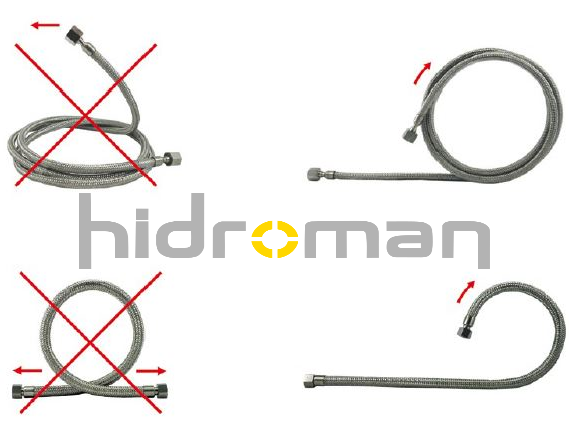
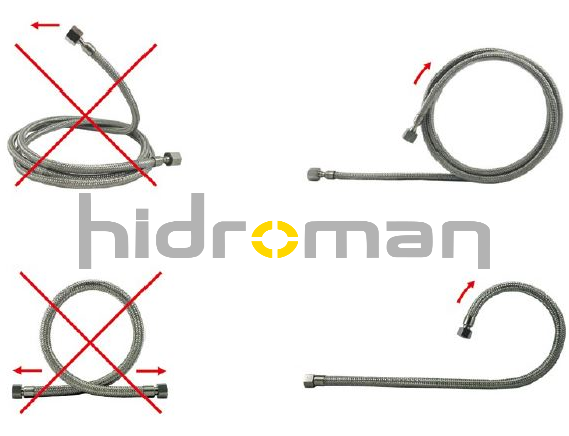
Incorrect installation can cause hose twisting, braid damage, stress around welded areas, and leakage at connection points.
1. Connection Preparation
For threaded connections, the thread type and sealing method should be identified before installation. PTFE tape or another thread sealant should only be used when permitted by the connection standard and manufacturer's instructions.
For hoses with threaded connections at both ends, the installation sequence should prevent twisting of the hose body.
2. Fitting Installation
The hose body must not rotate while tightening fittings. Use the designated wrench flats on the connection components.
Fittings and gaskets must be selected according to the media, pressure, temperature, and connection dimensions.
3. Flange Connections
For fixed-flange hose assemblies, check the alignment and orientation of the mating flanges. Select suitable gaskets, bolts, and nuts according to the application and tighten the connection in accordance with the manufacturer's instructions.
4. Avoid Excessive Hose Tension
Do not stretch the hose excessively during installation. Allow sufficient length for the required flexibility and any expected movement during operation.
5. Bend Radius and Torsion
The minimum allowable bend radius must be maintained. Sharp bends and twisting can create excessive stress in the metal hose body and braid.
Correct routing is particularly important in systems exposed to pressure fluctuations and mechanical movement.
6. Corrosion and Electrical Isolation
Stainless steel does not eliminate corrosion risk in every environment. Media compatibility, chemicals in the surrounding environment, chloride exposure, and contact between dissimilar metals must be considered.
Where necessary, suitable isolation and protective measures should be applied.
7. Do Not Bend the Hose Using a Wrench
Never use a wrench on the hose body to force a bend. This can deform the metal structure, damage the braid, and create future leakage problems.
7. Maintenance and Inspection
The service life of a stainless steel flexible hose depends on operating pressure, temperature, vibration, movement, media compatibility, and installation quality.
Regular inspection should include:
Cracks, dents, or deformation in the hose body
Broken, loosened, or worn wire braid
Damage around welded areas
Leakage at connection points
Corrosion or chemical exposure
Excessive bending or twisting
Contact with surrounding equipment
If chemical leakage, braid damage, or hose deformation is detected, the hose should be removed from service and technically evaluated. Damaged assemblies should be replaced as required.
Storage and Commissioning
Stainless steel flexible hoses should be stored in a clean, dry environment without mechanical stress. Excessive bending, crushing, and deformation should be avoided.
Before commissioning, inspect the connections, gasket selection, installation orientation, bend radius, and system operating pressure. Installation and commissioning should be carried out by qualified personnel.
8. How to Select the Right Stainless Steel Flexible Hose
Selecting the correct stainless steel flexible hose requires more than specifying its diameter and length. All operating conditions should be evaluated.
Media compatibility: Determine whether the hose material is suitable for water, air, gas, steam, hot oil, or the relevant chemical media.
Operating pressure: Consider continuous working pressure and possible pressure fluctuations.
Operating temperature: Evaluate both the conveyed media temperature and the surrounding ambient temperature.
Hose diameter: Select the correct diameter according to flow requirements and connection dimensions.
Hose length: Determine the length according to installation distance, vibration, and movement requirements.
Wire braid: Select the appropriate braid configuration according to pressure and mechanical strength requirements.
Connection type: Specify threaded, flanged, nipple, or custom connections.
Installation conditions: Check bend radius, torsion, axial movement, and potential mechanical contact.
9. Hidroman Stainless Steel Flexible Hose Configurations
Hidroman evaluates different stainless steel flexible hose configurations according to application requirements.
Flexible metal hoses: Used for flexible piping connections and fluid transfer.
Stainless steel braided hoses: Reinforced with an external stainless steel wire braid.
Protective-covered hoses: Can be supplied with optional fiberglass or silicone coverings.
Custom hose assemblies: Prepared with threaded, flanged, nipple, or application-specific connections.
The final configuration depends on diameter, length, operating pressure, temperature, and connection requirements.
10. Request a Stainless Steel Flexible Hose Quotation
To help determine the correct hose configuration, please provide the following information:
Required hose diameter
Required hose length
Type of conveyed media
Operating pressure
Operating temperature
Connection type and dimensions
Wire braid requirements
Fiberglass or silicone covering requirements
Installation location and operating conditions
After reviewing the technical details, the suitable hose construction, connection options, and manufacturing scope can be determined.
Contact Hidroman for stainless steel flexible hose manufacturing and application-specific solutions.
Frequently Asked Questions
What is a stainless steel flexible hose?
A stainless steel flexible hose is a flexible metal hose manufactured from stainless steel. It is used to transfer water, air, gas, steam, and other compatible media.
Where are stainless steel flexible hoses used?
They are used in water lines, hot oil systems, steam lines, fan coil connections, solar energy systems, power plants, chemical processing, automotive, and marine applications.
What sizes of stainless steel flexible hoses does Hidroman manufacture?
Hidroman manufactures stainless steel flexible hoses in diameters ranging from 1/4 inch to 10 inches.
What is the temperature range of stainless steel flexible hoses?
Temperature capability depends on the hose construction, stainless steel grade, braid, and end connections. The source product information lists different ranges, including -270°C to +600°C and -200°C to +550°C. The exact limits must be verified in the product documentation.
Can stainless steel flexible hoses be used in high-pressure applications?
Stainless steel flexible hoses with suitable wire braid reinforcement can be designed for pressurized applications. The allowable working pressure depends on diameter, hose construction, braid, connections, and operating temperature.
What is the difference between stainless steel flexible hose and stripwound hose?
Stripwound hoses are made from interlocking metal strips. Stainless steel flexible hoses designed for fluid transfer have a different construction and sealing function. The two products should not be treated as interchangeable.
What is the purpose of stainless steel wire braid?
The wire braid reinforces the hose body, helps control pressure-related expansion, and improves mechanical resistance.
Which connection types are available?
Depending on the application, threaded, nipple, union, flanged, and custom connection configurations can be considered.
What should be considered during installation?
Prevent hose twisting, maintain the minimum bend radius, use suitable gaskets and fittings, and avoid applying wrench force directly to the hose body.
Do stainless steel flexible hoses require maintenance?
Yes. The hose body, wire braid, welded areas, and connections should be inspected regularly. Hoses with damage, corrosion, or leakage should be evaluated and replaced when necessary.
Related Articles